What is the difference between an atheist, an agnostic and a “none”?
The three words answer different questions, so here are fair definitions, where “agnostic” came from, and what Pew’s surveys show about the nones, many of whom still believe in God.
God Plays Dice Editorial · independently fact-checked · corrections welcomeChecked Sep 26, 20268 min read
THE SHORT ANSWER
They answer different questions. An atheist believes there is no God, or at least lacks belief in God. An agnostic thinks we don’t or can’t know whether God exists. A “none” is anyone who tells a survey their religion is atheist, agnostic or “nothing in particular.” In Pew’s 2023-24 study, 29% of U.S. adults were nones: 5% atheist, 6% agnostic and 19% nothing in particular. Many nones still believe in God or a higher power.
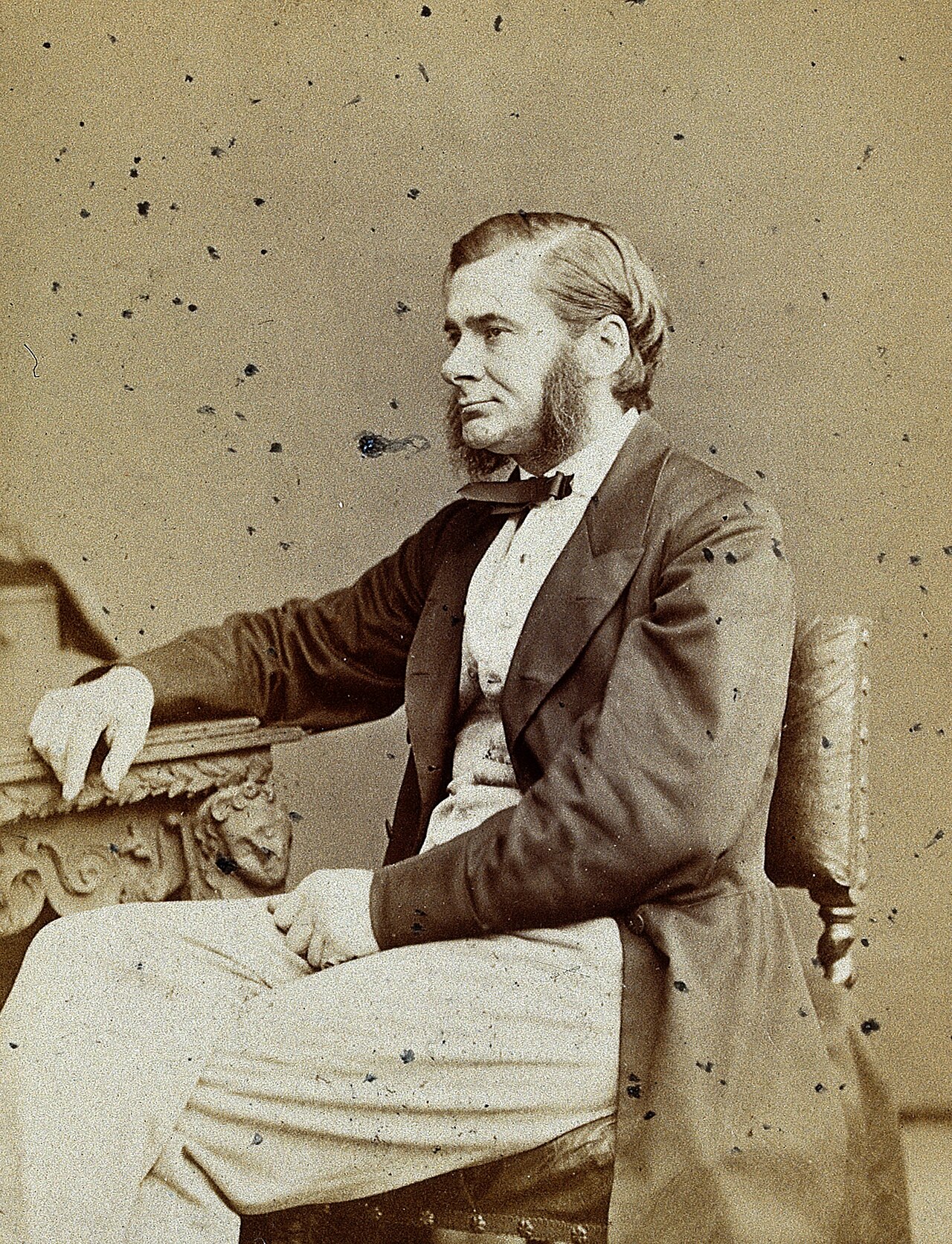
The biologist Thomas Henry Huxley first used the word “agnostic” in public in 1869, for people who did not claim to know whether God exists.
Pew’s 2023-24 Religious Landscape Study of 36,908 U.S. adults found 29% had no religion: 5% atheist, 6% agnostic and 19% “nothing in particular.”
In a 2023 Pew survey, 70% of nones said they believe in God or some other higher power.
In the same survey, 13% of nones said they pray every day, and another 16% pray weekly or monthly.
In Pew’s 2023-24 study, 21% of all U.S. adults said they are spiritual but not religious.
About this picture
The biologist Thomas Henry Huxley, photographed by Ernest Edwards in 1868. The next year, by Britannica’s account, he first used the word “agnostic” in public.
Ernest Edwards (photographer), Wellcome Collection, via Wikimedia Commons · CC BY 4.0 · Image source ↗
WHERE THE EVIDENCE STANDS
How sure are we?
Atheist and agnostic mean different things.Stanford Encyclopedia of Philosophy, “Atheism and Agnosticism”: atheism is about whether God exists, agnosticism about whether anyone knows; in the broad sense of “atheist” the two can overlap.
Most religious nones are atheists.Pew, 2023 survey of 11,201 adults: 17% of nones call themselves atheists, 20% agnostics and 63% “nothing in particular.”
Most religious nones do not believe in God or any higher power.Pew, 2023: 70% of nones believe in God or another higher power; about three in ten believe in neither.
The share of Americans with no religion has stopped rising.Pew’s 2023-24 Religious Landscape Study says the unaffiliated share has leveled off “at least temporarily”; Pew also lists reasons religiousness may decline further.
Surveys sort people by the label they pick, and people use these words in different ways. So the numbers show how people describe themselves, not exactly what they believe. Nobody knows yet whether the leveling off of the nones will last.
WHAT WOULD CHANGE THIS ANSWER
New surveys could shift the numbers on this page. The definitions could shift too, since philosophers still argue about how best to define “atheism” and “agnosticism.”
These three words get mixed up all the time, so here is the short version. An atheist says there is no God, or at least does not believe in one. An agnostic says we don’t know, or can’t know, whether God exists. A “none” is anyone who picks atheist, agnostic or “nothing in particular” when a survey asks about their religion. So everyone who picks atheist or agnostic is counted as a none, but most nones pick neither.
People ask this for many reasons. Some are trying to find the right word for themselves after years of doubt. Some have a child, a partner or a friend who stopped going to church. Some saw a headline about the “rise of the nones” and wondered who these people are. All of these are good reasons, and no answer here is a score for one side.
One helpful way to see it: atheism is mostly about what you believe, and agnosticism is mostly about what you think can be known. The biologist Thomas Henry Huxley made up the word “agnostic” for people like himself, who did not claim to know the answer. By Britannica’s account, he first used it in public in 1869.
The nones are a much bigger and more mixed group. In the Pew Research Center’s 2023-24 Religious Landscape Study, 29% of U.S. adults had no religion. That included 5% who called themselves atheists, 6% who called themselves agnostics and 19% who said “nothing in particular.” (The figures are rounded.)
Many nones are not nonbelievers at all. In a 2023 Pew survey, 70% of nones said they believe in God or some other higher power. About three in ten said they pray at least once a month. Whatever label fits you, or none of them, you are welcome to keep asking here.
THE LONG ANSWER
THE LONG ANSWER · ABOUT 7 MINUTES
You’ve read your 3 free long answers this month.
The short answer, how sure we are, what we don’t know, what would change our mind and every source stay free on every page, for everyone.
All Access members read the long answer: the evidence piece by piece, the strongest objections, and how to check it yourself.
In the broad sense, a person who lacks belief in God. In the narrow sense used in philosophy, a person who holds that God does not exist.
Agnostic
A person who believes neither that God exists nor that God does not exist, often because they think the question can’t be settled. The word was coined by T.H. Huxley.
Religious “nones”
People who describe their religion as atheist, agnostic or “nothing in particular” in a survey. Pew also calls them the religiously unaffiliated.
Humanism
A way of life built on human reason, ethics and care for others, without relying on God.
Spiritual but not religious
A self-description for people who feel a connection to something beyond themselves but do not see themselves as religious.
Sources & further reading
(10) · Checked Sep 26, 2026
Atheism and Agnosticism ↗Stanford Encyclopedia of Philosophy (Paul Draper; first published 2017, revised 2022)Section 1: psychological sense (lacking the belief that God exists) vs the standard philosophical sense (the proposition that God does not exist); Cambridge Dictionary: the broad sense is consistent with agnosticism; friendly vs unfriendly atheism (Rowe); pro-God and anti-God atheists. Section 2: Huxley coined ‘agnostic’ in the late nineteenth century; modern sense: has considered whether God exists and believes neither; epistemological sense: neither theism nor atheism is known.
Agnosticism (1889), Collected Essays V ↗Thomas Henry Huxley, The Huxley File, Clark UniversityHuxley’s own account: at the Metaphysical Society he was ‘the man without a rag of a label’; he invented ‘agnostic’ as ‘antithetic to the gnostic of Church history’; ‘Agnosticism, in fact, is not a creed, but a method’; replies to ‘feeble talk about the cowardice of agnosticism.’
Agnosticism ↗Encyclopaedia BritannicaFirst publicly coined in 1869 at a meeting of the Metaphysical Society in London by T.H. Huxley, a British biologist and champion of Darwin’s theory; from Greek agnōstos, ‘unknowable’. The live page returned HTTP 403 to scripted requests, so it was read from the Internet Archive snapshot of 2026-01-09.
Decline of Christianity in the U.S. Has Slowed, May Have Leveled Off: Executive summary (2023-24 Religious Landscape Study) ↗Pew Research Center (2025)62% Christian; 29% religiously unaffiliated: 5% atheist, 6% agnostic, 19% nothing in particular (rounded); unaffiliated share leveled off, at least temporarily; 35% have switched religions. Methodology page (https://www.pewresearch.org/religion/2025/02/26/religious-landscape-study-methodology/): NORC, English and Spanish, July 17, 2023 to March 4, 2024, 36,908 U.S. adults.
Religious and spiritual beliefs (2023-24 Religious Landscape Study) ↗Pew Research Center (2025)More than half of unaffiliated adults believe in God or a universal spirit: 69% of ‘nothing in particular’, 43% of agnostics, 7% of atheists; at least half of atheists are absolutely certain there is no God or universal spirit; 80% of atheists say the natural world is all there is.
Spiritual and religious self-descriptions (2023-24 Religious Landscape Study) ↗Pew Research Center (2025)53% spiritual and religious, 21% spiritual but not religious, 5% religious but not spiritual, 21% neither; among nones 37% spiritual but not religious and 48% neither; half of unaffiliated at least somewhat spiritual (atheists 24%, agnostics 47%, nothing in particular 58%).
Religious ‘Nones’ in America: Who They Are and What They Believe ↗Pew Research Center (2024)Survey July 31 to Aug. 6, 2023, 11,201 respondents incl. 3,317 nones; about 28% of U.S. adults unaffiliated; 17% atheist, 20% agnostic, 63% nothing in particular; term used since at least the 1960s, Glenn M. Vernon (1968) footnote; two-thirds question teachings or don’t believe in God; 47% dislike religious organizations; 90% seldom or never attend; 43% more harm, 14% more good, 41% equal; 83% avoid hurting others; most nones and most affiliated say one can be moral without God. Chapter ‘Who are the nones?’ gives the ‘What is your present religion, if any?’ question.
Are all religiously unaffiliated adults in the US nonbelievers? ↗Pew Research Center (2024)70% of nones believe in God or another higher power (13% God as described in the Bible, 56% another higher power); about three in ten believe in neither; 22% of atheists believe in some other higher power; 13% pray daily, 16% weekly or monthly, 71% seldom or never.
Are US ‘nones’ spiritual instead of religious? ↗Pew Research Center (2024)49% of nones are spiritual by Pew’s measure vs 79% of affiliated adults; majorities of spiritual nones say being open-minded and connected with nature are essential to spirituality.
The Amsterdam Declaration ↗Humanists International (2022 version)Defining statement adopted 1952, updated 2002 and 2022 (Glasgow); morality ‘needing no source outside of humanity’; seeks to cooperate with people of different beliefs. American Humanist Association (https://americanhumanist.org/what-is-humanism/definition-of-humanism/): humanism is a non-theistic belief system; a natural home for atheists, agnostics and the non-religious; does not seek to oppose or end organized religion.
There is no single religious creation account. Here are three selected texts: Genesis, the Quran and a Rigveda hymn. These examples do not speak for every religion or…
Big beliefs touch identity, family and what feels sacred, so here is what research says helps a hard conversation, a step-by-step way to try it, and why you are allowed to stop.
Religion shows up almost wherever people live, so here is what surveys and archaeology show, what scientists think explains it, how those ideas have held up, and how believers and skeptics read the same facts.
Supported, still debated9 min read
What the labels mean
Established
Strong, repeated evidence and broad scientific agreement.
Supported, still debated
Good evidence; the details are still argued.
Open question
Nobody knows yet. Serious ideas compete.
Not supported
Checked, and the evidence does not back it.
Author’s hypothesis
Ricardo Maldonado’s own proposal. Unconfirmed, and testable.
Beyond science
Philosophy, values or belief. Science can inform it but not settle it.
Labels describe the evidence for a claim, not the people who hold it.