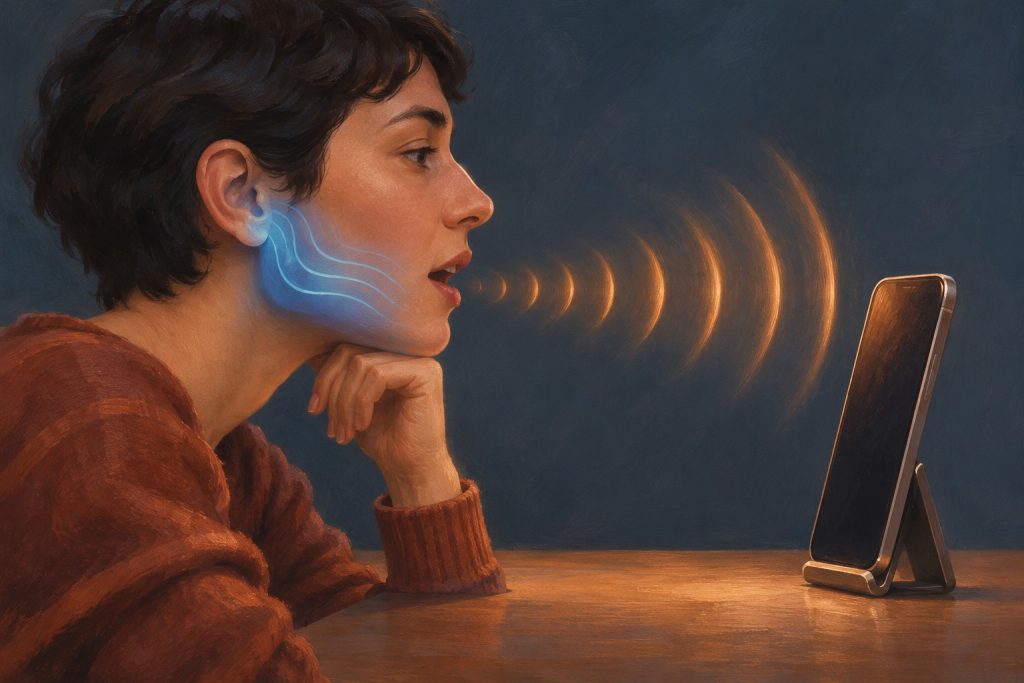
Memory rebuilds the past each time we recall it, so here is what it usually gets right, where honest people go wrong, and how to check a memory that matters.
God Plays Dice Editorial · independently fact-checked · corrections welcomeChecked Sep 30, 20269 min read
THE SHORT ANSWER
Mostly, yes, but not blindly. Memory does not play back a recording; the brain rebuilds the past each time we recall it. In one study, 93% to 95% of the details people recalled on their own about real events, days to years later, were accurate, though they recalled less over time. But leading questions and later stories can blend in, and feeling sure is no guarantee. Honest people can misremember without lying. Notes made at the time let you check.
In a 1932 book, the psychologist Frederic Bartlett reported that people retelling an unfamiliar story changed details they could not understand, and a careful 1999 repeat found the same drift.
In a 1974 experiment, people asked how fast cars “smashed” into each other were more than twice as likely a week later to say they saw broken glass that was not there (32% vs 14%), and hundreds of later studies find that misleading information can bias what people remember.
Duke students who wrote down their 9/11 memories the next day told less consistent stories weeks or months later, yet their confidence did not fade, and a larger ten-year study found the same pattern.
In a 2023 preregistered repeat of the influential “lost in the mall” study, 35% of 123 people were coded as reporting a false childhood memory.
In a 2020 study, people recalling real, checkable events days to years later remembered less over time, but 93% to 95% of the details they did recall were accurate.
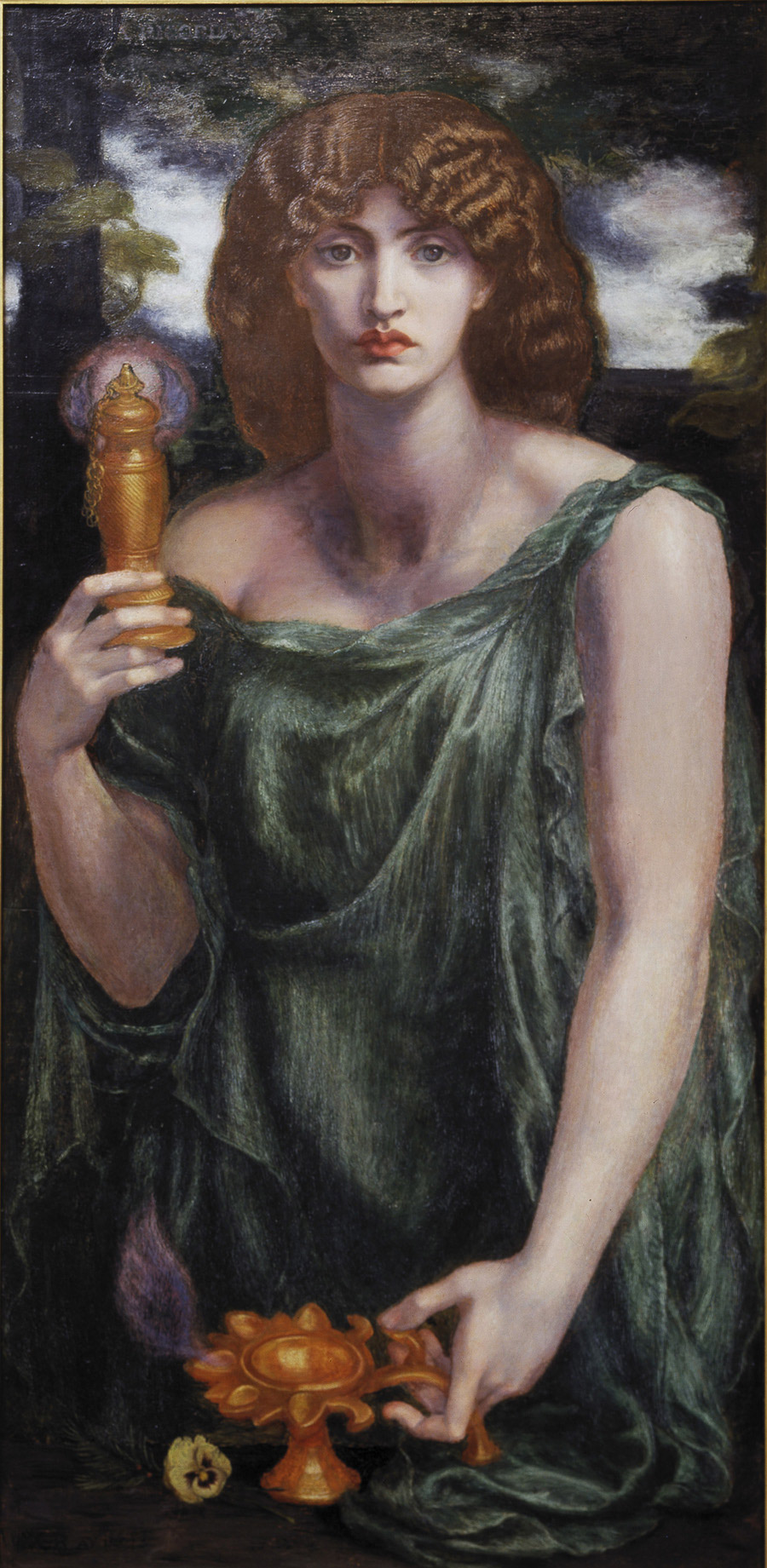
About this picture
Mnemosyne, also called Lamp of Memory, by Dante Gabriel Rossetti, dated 1881 (Delaware Art Museum). The verse on its frame says Memory fills her lamp “from the winged chalice of the soul.” Research pictures memory more plainly, as something the brain rebuilds each time we recall it.
Dante Gabriel Rossetti, Mnemosyne (Lamp of Memory), Delaware Art Museum, Samuel and Mary R. Bancroft Memorial, via Wikimedia Commons · Public domain · Image source ↗
WHERE THE EVIDENCE STANDS
How sure are we?
Memory rebuilds the past rather than replaying it, so details can shift and later information can blend in.Bartlett (1932), repeated by Bergman and Roediger (1999): distortion grew as the delay grew. Loftus and Palmer (1974), and a 2014 meta-analysis by Blank and Launay that notes hundreds of misinformation studies. The National Academies (2014): unknown to the person, memories are forgotten, reconstructed, updated and distorted. A 2017 hockey-video test found no word effect on speed estimates; its authors suggest the effect may depend on the setting.
What people recall on their own about real events is usually accurate, even as they forget more over time.Diamond, Armson and Levine (2020): details freely recalled from controlled but real, verifiable events after days to years were 93% to 95% accurate, far above what memory scientists and other academics guessed in a survey; this is one study. Brewin, Andrews and Mickes (2020) defend the old consensus that memory is malleable but essentially reliable. But Talarico and Rubin (2003) found that ordinary memories, like 9/11 memories, grew less consistent over months.
If a memory feels vivid and sure, it must be accurate.Talarico and Rubin (2003) and Hirst and colleagues (2009, 2015): 9/11 memories changed while confidence stayed high. Wixted and Wells (2017) add that a witness’s first high-confidence identification under fair, uncontaminated conditions is remarkably accurate; the National Academies (2014) note that confidence can shift over time and be powerfully swayed.
Suggestion can lead some people to remember childhood events that never happened.Murphy and colleagues’ 2023 preregistered repeat of Loftus and Pickrell (1995): 35% of 123 people; Scoboria and colleagues’ 2017 mega-analysis of 8 studies (423 people): 30.4% classed as false memories. How often these are full memories is debated: Brewin and Andrews (2017) put it at about 15%.
Hypnosis can recover accurate hidden memories.The Council on Scientific Affairs (JAMA, 1985) found hypnotically refreshed memories can include confabulations and pseudomemories and appear less reliable than normal recall. Steblay and Bothwell’s 1994 meta-analysis of 24 studies found mixed accuracy, more errors, more pseudomemory and higher confidence under hypnosis.
Researchers still debate how much to trust everyday memory, how often suggestion creates full false memories, and how well lab findings carry over to real life. Whether recalling a memory truly reopens it to change in people is also unsettled.
WHAT WOULD CHANGE THIS ANSWER
More studies that check people’s memories of real events against records could settle how far everyday memory can be trusted. Careful tests in which hypnosis recovered true details without adding false ones would change the verdict on hypnosis.
You and your sister remember the same birthday party differently. A witness is sure, and wrong. You saw something strange in the sky years ago, and you wonder how much of your memory you can rely on. These are fair questions, and memory science has useful answers.
The short answer: mostly yes, but not blindly. Memory is not a video that plays back the same way each time. The brain rebuilds the past when we recall it, and it can fill gaps with what we expect. In a 1932 book, the psychologist Frederic Bartlett described how people retold an unfamiliar story and changed details they could not understand. A careful 1999 repeat of his study found the same thing: the longer the delay, the more the story drifted.
Later information can blend in, too. In a 1974 experiment, students watched a film of a car crash. A week after being asked how fast the cars “smashed” into each other, 32% said they had seen broken glass. Among those asked how fast the cars “hit,” 14% did. There was no broken glass. Hundreds of later studies have found that misleading information can bias what people remember, though not every test of the word effect has repeated it.
Feeling sure does not settle it. The day after the September 11 attacks, 54 college students wrote down how they had heard the news. Weeks or months later, their stories had drifted as much as their memories of an ordinary event. Their confidence had not.
None of this makes people liars. Memories change, as a National Academies report puts it, “unknown to the individual.” It also does not mean your experiences never happened. In a 2020 study, people recalled real, checkable events days to years later. They recalled less over time, but 93% to 95% of the details they did recall were accurate. That memory rebuilds the past is well established. How far to trust it day to day is still debated, so we label this answer Supported, still debated. A good habit follows: write important things down soon, and check them against records.
THE LONG ANSWER
THE LONG ANSWER · ABOUT 7 MINUTES
You’ve read your 3 free long answers this month.
The short answer, how sure we are, what we don’t know, what would change our mind and every source stay free on every page, for everyone.
All Access members read the long answer: the evidence piece by piece, the strongest objections, and how to check it yourself.
The finding that the brain rebuilds a memory each time we recall it, rather than replaying a fixed record.
Misinformation effect
When misleading information received after an event, such as a leading question, changes what people remember about the event.
Flashbulb memory
A vivid memory of where you were and how you heard shocking news.
Reconsolidation
The idea that a recalled memory becomes changeable for a while before it is stored again.
Double-blind lineup
A lineup run by someone who does not know which person is the suspect, so they cannot hint to the witness.
Registered replication
A repeat of an earlier study whose plan was made public before the data came in, which makes it harder to bend the analysis afterward.
Sources & further reading
(10) · Checked Sep 30, 2026
Identifying the Culprit: Assessing Eyewitness Identification ↗National Research Council, The National Academies Press (2014)Summary (https://www.nationalacademies.org/read/18891/chapter/2): eyewitnesses make mistakes and their memories can be affected by the very procedures designed to test them; dim illumination, brief viewing times, large viewing distances, duress, elevated emotions, a gun or a knife; memory “highly malleable”; “Unknown to the individual, memories are forgotten, reconstructed, updated, and distorted”; confidence judgments “may vary over time and can be powerfully swayed”; recommendations for double-blind lineups, standardized instructions, documenting confidence verbatim at the first identification, and video recording; simultaneous versus sequential lineups unresolved. Chapter 1, Box 1-1: the Ronald Cotton case (1984; Jennifer Thompson, a college student, raped in Burlington, North Carolina; chose two photos “with some difficulty”; “You did great”; “absolutely sure” at trial; 10.5 years served before DNA exoneration; the book Picking Cotton); she became certain only after confirmatory remarks and two procedures in which Cotton was the only person shown both times. Chapter 2: in a double-blind procedure, neither the eyewitness nor the administrator knows which persons in the photo array or lineup are the suspects.
Can Bartlett’s repeated reproduction experiments be replicated? (Bergman and Roediger) ↗Memory & Cognition 27 (1999): 937–947Earlier partial replications unsuccessful; close replication with “The War of the Ghosts” (tests after 15 minutes, 1 week, and 6 months): forgetting plus rationalization and distortion that increased with the delay; new propositions imported. Also: Cambridge University Press page for Bartlett’s Remembering (https://doi.org/10.1017/CBO9780511759185): published in 1932; subjects read a Native American story about ghosts and retold it, changing details they could not understand because of their different background; memory as reconstruction.
Reconstruction of automobile destruction: An example of the interaction between language and memory (Loftus and Palmer) ↗Journal of Verbal Learning and Verbal Behavior 13 (1974): 585–589Checked against a scanned copy of the article, since the publisher’s page refuses scripted requests. Experiment 1: 45 students, 7 films; mean speed estimates smashed about 40 (the scan’s text layer reads 40.5), collided 39.3, bumped 38.1, hit 34.0, contacted 31.8 mph. Experiment 2: 150 students, 50 per group; “Did you see any broken glass?” a week later: yes 16 of 50 (smashed), 7 of 50 (hit), 6 of 50 (control); no broken glass in the film; most people markedly inaccurate at time, speed and distance. Also: Blank and Launay, Journal of Applied Research in Memory and Cognition 3 (2014), doi:10.1016/j.jarmac.2014.03.005 (four decades and hundreds of studies; 25 post-warning studies; warnings cut the effect to less than half on average); Goldschmied and colleagues, Quarterly Journal of Experimental Psychology 70 (2017), doi:10.1080/17470218.2016.1237980 (hockey conceptual replication: “contact,” “bump” or “smash” made no difference to reported skating speed; the authors suggest the effect may be domain specific).
Confidence, not consistency, characterizes flashbulb memories (Talarico and Rubin) ↗Psychological Science 14 (2003): 455–46154 Duke students recorded memories on September 12, 2001; retested 1, 6 or 32 weeks later; consistency declined equally for flashbulb and everyday memories; vividness and belief in accuracy declined only for everyday memories; flashbulb memories special only in perceived accuracy. Also: Hirst and colleagues, Journal of Experimental Psychology: General 138 (2009), doi:10.1037/a0015527 (more than 3,000 people, 7 U.S. cities; emotional reactions remembered worse than where and from whom); Hirst and colleagues, Journal of Experimental Psychology: General 144 (2015), doi:10.1037/xge0000055 (follow-ups at 11, 25 and 119 months; rapid forgetting in the first year, then level; confidence high throughout; inconsistent memories repeated rather than corrected).
Lost in the mall again: a preregistered replication and extension of Loftus & Pickrell (1995) (Murphy and colleagues) ↗Memory 31 (2023): 818–830University College Cork and University College Dublin; N = 123, sample five times larger, preregistered; real and fabricated childhood events based on information from an older relative; 35% coded as false memories (25% in the original); mock jurors highly likely to believe. Also: Scoboria and colleagues, Memory 25 (2017), doi:10.1080/09658211.2016.1260747 (8 studies, N = 423; 30.4% false memories, 23% partial acceptance); Brewin and Andrews, Applied Cognitive Psychology 31 (2017), doi:10.1002/acp.3220 (some recollective experience in 47% on average, likely full memories in 15%; susceptibility more limited than suggested).
Fear memories require protein synthesis in the amygdala for reconsolidation after retrieval (Nader, Schafe and LeDoux) ↗Nature 406 (2000): 722–726Rats (PubMed MeSH); anisomycin infused into the amygdala shortly after reactivation produced amnesia; no amnesia without reactivation or with a six-hour delay. Also: Chalkia and colleagues, Cortex 129 (2020), doi:10.1016/j.cortex.2020.04.017 (highly powered, preregistered, direct replication of Schiller and colleagues 2010, a result that had been the subject of considerable controversy: no benefit of reactivation-extinction; questions whether there is robust evidence that reactivation-extinction prevents the return of fear in humans).
Scientific status of refreshing recollection by the use of hypnosis (Council on Scientific Affairs) ↗JAMA 253 (1985): 1918–1923Recollections during hypnosis can involve confabulations and pseudomemories, fail to be more accurate, and appear less reliable than nonhypnotic recall. Also: Steblay and Bothwell, Law and Human Behavior 18 (1994), doi:10.1007/BF01499329 (meta-analysis of 24 studies: accuracy favored hypnosis after 1 to 2 days, d = .46, but not under 24 hours, d = −.29, or after one week, d = −.24; more uncued errors, more pseudomemory, higher confidence); Leo, Bruno and Proietti, Frontiers in Psychology 16 (2025), doi:10.3389/fpsyg.2025.1433762 (some effectiveness in enhancing memory, with contradictory findings; hypnotic regression and guided imagery should be used with caution because they may lead to false memories).
The Relationship Between Eyewitness Confidence and Identification Accuracy: A New Synthesis (Wixted and Wells) ↗Psychological Science in the Public Interest 18 (2017): 10–65Under pristine conditions (initial, uncontaminated test, fair lineup, no administrator influence, immediate confidence statement), confidence and accuracy strongly related and high-confidence suspect identifications remarkably accurate; unfair lineups seriously compromise even high-confidence IDs. Also: Innocence Project, April 15, 2020 (https://innocenceproject.org/news/how-eyewitness-misidentification-can-send-innocent-people-to-prison/): 69% of DNA exonerations, 252 of 367, involved eyewitness misidentification; mistaken eyewitnesses are not lying.
Regaining Consensus on the Reliability of Memory (Brewin, Andrews and Mickes) ↗Current Directions in Psychological Science 29 (2020): 121–125Abstract (OpenAlex): three claims (weak confidence-accuracy link, easily implanted childhood false memories, public belief that memory is like a video camera) “rest on shaky foundations”; no reason to abandon the old consensus that memory is “malleable but essentially reliable.” Also: Diamond, Armson and Levine, Psychological Science 31 (2020): 1544–1556, doi:10.1177/0956797620954812 (PubMed abstract: younger and older adults freely recalled controlled, verifiable real-world experiences after days to years; memory quantity and richness declined with age and delay, but recalled details were 93% to 95% accurate across age and time, far above estimates by memory scientists and other academics in a survey).
Do babies understand more than they can say? See evidence on early word meanings, sound-pattern learning and speech attention—and the limits of infant experiments.
Established3 min read
THE OCCASIONAL LETTER
Stay curious.
New stories, book updates, and notes from God Plays Dice, delivered when there is something worth sharing.
EMAIL UPDATES ↗
500 DIGITAL COPIES • GIVEAWAY PREVIEW
Be first to know when the 500-copy reader giveaway opens.
Join for the book launch, verified retailer links, and the announcement for a planned giveaway of 500 digital copies. The giveaway is not open yet: dates, eligibility, a dedicated entry form, and Official Rules will be published first.
Privacy · Check your inbox to confirm your subscription. Newsletter signup alone is not a giveaway entry.