How We KnowAnswer
Why Can We Read Mammoth DNA but Not Dinosaur DNA?
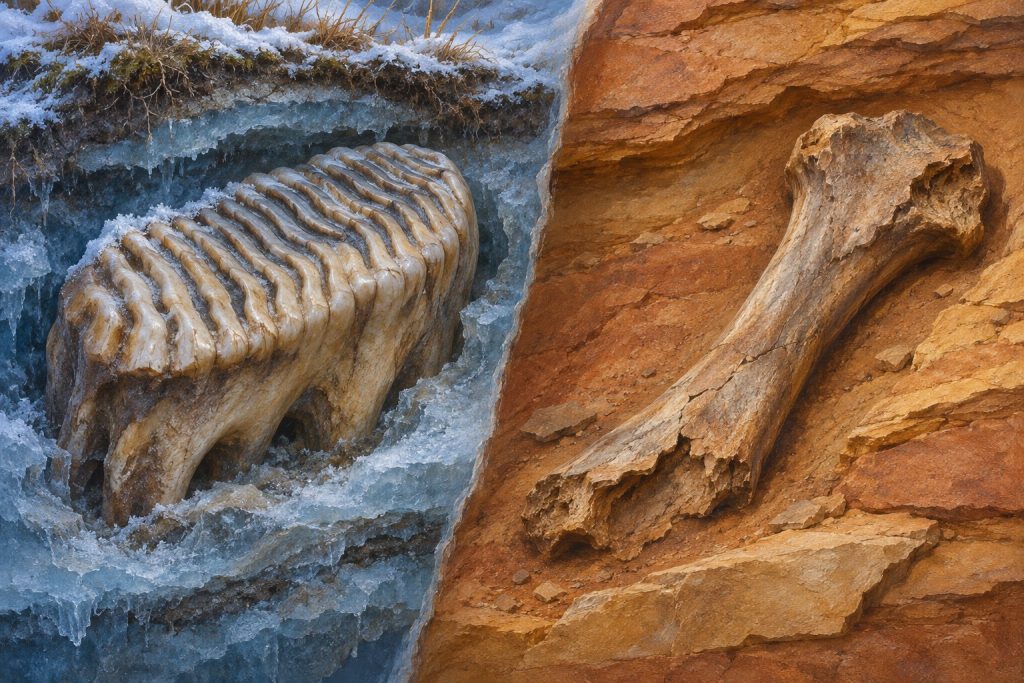
A frozen mammoth tooth can hold readable DNA. A dinosaur fossil can preserve the shape of a bone for far longer. Here’s why those are different feats.
THE QUESTION LIBRARY HOW WE KNOW
Rock layers show what came first, and natural atomic clocks help put dates on that history.
Scientists combine the order of rock layers with natural atomic clocks that measure time in years. Some atoms change into other atoms at known rates. Measuring what remains and what formed helps date a suitable mineral. Fossils are often dated by rocks or ash above and below them. Each method fits particular materials and ages, and each result has uncertainty. Carbon-14 is useful for relatively recent organic remains, not ancient dinosaur fossils.
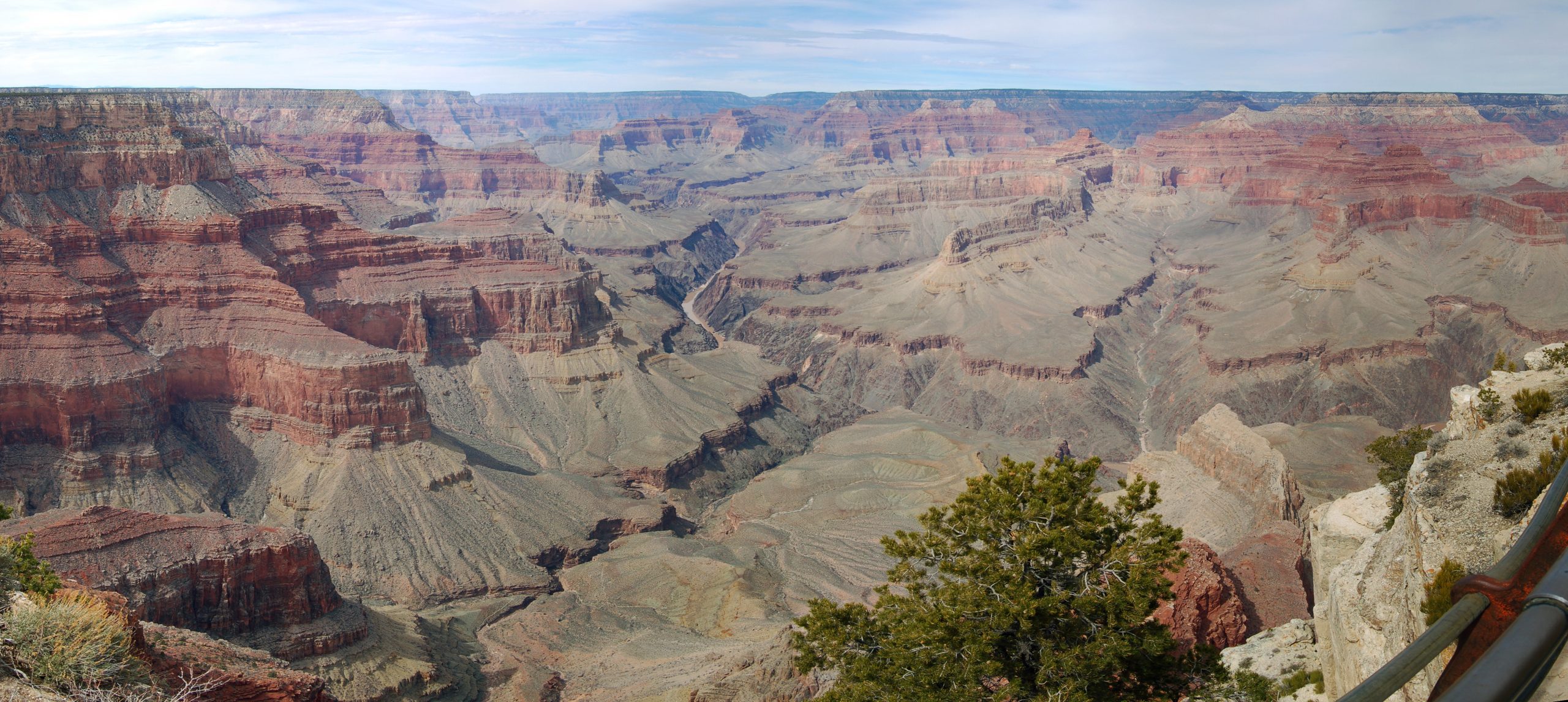
Rock layers visible from Pima Point in Grand Canyon National Park. Reading their order is one part of reconstructing the past.
WHERE THE EVIDENCE STANDS
WHAT WE DON’T KNOW YET
Some sites lack material that can give a narrow age range. Missing layers, moved fossils or later changes to a mineral can leave parts of a local history unresolved.
WHAT WOULD CHANGE THIS ANSWER
A new dated ash layer or a better analysis can revise the age assigned to a particular find. The broad method would need revision if careful, repeatable checks showed that its clocks or sample assumptions fail under the conditions in which they are used.
Scientists read two kinds of evidence together: the order of events recorded in rocks, and natural atomic clocks that can put ages on those events. The basic methods are well established. The challenge is choosing the right method for the particular rock or fossil in front of them.
Picture a fossil in a cliff made of layers. If those layers remain in their original order, the layers below were laid down earlier and those above later. That tells us where the fossil belongs in a sequence. It does not, by itself, say how many years have passed. A geologist also checks for folding, breaks and missing layers before reading that sequence.
Now suppose volcanic ash lies above and below the fossil. Suitable minerals in that ash can contain unstable atoms that change into other atoms at a known rate. The original atoms are called parents, and the atoms they produce are daughters. A lab measures their proportions. With the right checks, those measurements provide an age for the mineral and help place the fossil between an older and a younger event.
This is why a fossil can have a well-supported age even when nobody has run a clock on the fossil itself. The surrounding evidence carries the date. Fossils shared between sites and patterns in the rocks' magnetic record can provide further comparisons.
No clock suits everything. Carbon-14 dating needs preserved organic material and works best over relatively recent spans. Other clocks can reach much further into the past. Nor does a mineral's age always mean the age of the layer containing it: a grain may have formed in an older rock before being carried into a younger deposit.
A good age report therefore names the material, the method, the event it measures and the uncertainty. Scientists gain confidence by checking whether those pieces fit the geology and agree with other evidence.
THE LONG ANSWER · ABOUT 6 MINUTES
The short answer, how sure we are, what we don’t know, what would change our mind and every source stay free on every page, for everyone.
All Access members read the long answer: the evidence piece by piece, the strongest objections, and how to check it yourself.
Join All Access · $1 a week Or $6 a month
Billed $52 once a year. Cancel anytime in your account.
Until December 4, 11:59 pm Pacific: the Founding rate is $39 a year, and it stays $39 while you stay a member.
Create a free account: 6 long answers a month, email only.
Paying never buys a different answer. Our Paywall Promise
How can you tell good science from bad science?
Good science makes a clear, testable claim; shows how evidence was gathered and analyzed; reports uncertainty; and lets others check the work.
God Plays Dice answers big questions in plain words, with sources and one of six honest labels.
See a mistake? Report a problem. Corrections are made openly.
CONTINUE THE THREAD
How We KnowAnswer
A frozen mammoth tooth can hold readable DNA. A dinosaur fossil can preserve the shape of a bone for far longer. Here’s why those are different feats.
How We KnowAnswer
If 100 bacteria carry the same DNA change, did it arise once or many times? The answer matters when testing Ricardo Maldonado’s hypothesis.
How We KnowAnswer
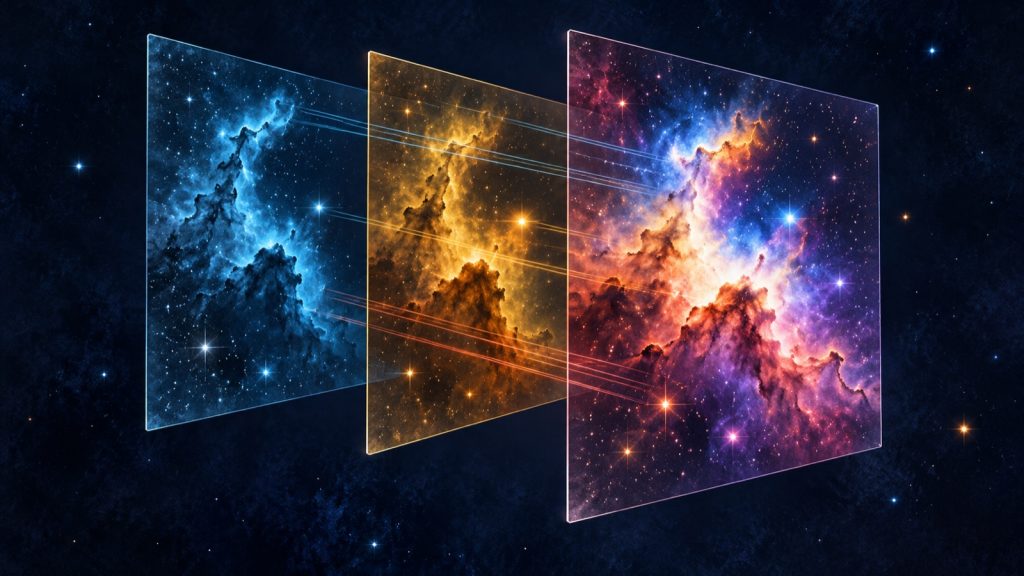
A space image can be faithful to measured light without matching human eyesight. Here is how to read the translation.
The Architect AI companion · All Access
Labels describe the evidence for a claim, not the people who hold it.
Match my phone uses your device’s light or dark setting.