The UniverseExplainer
What Is a Black Hole, Really?
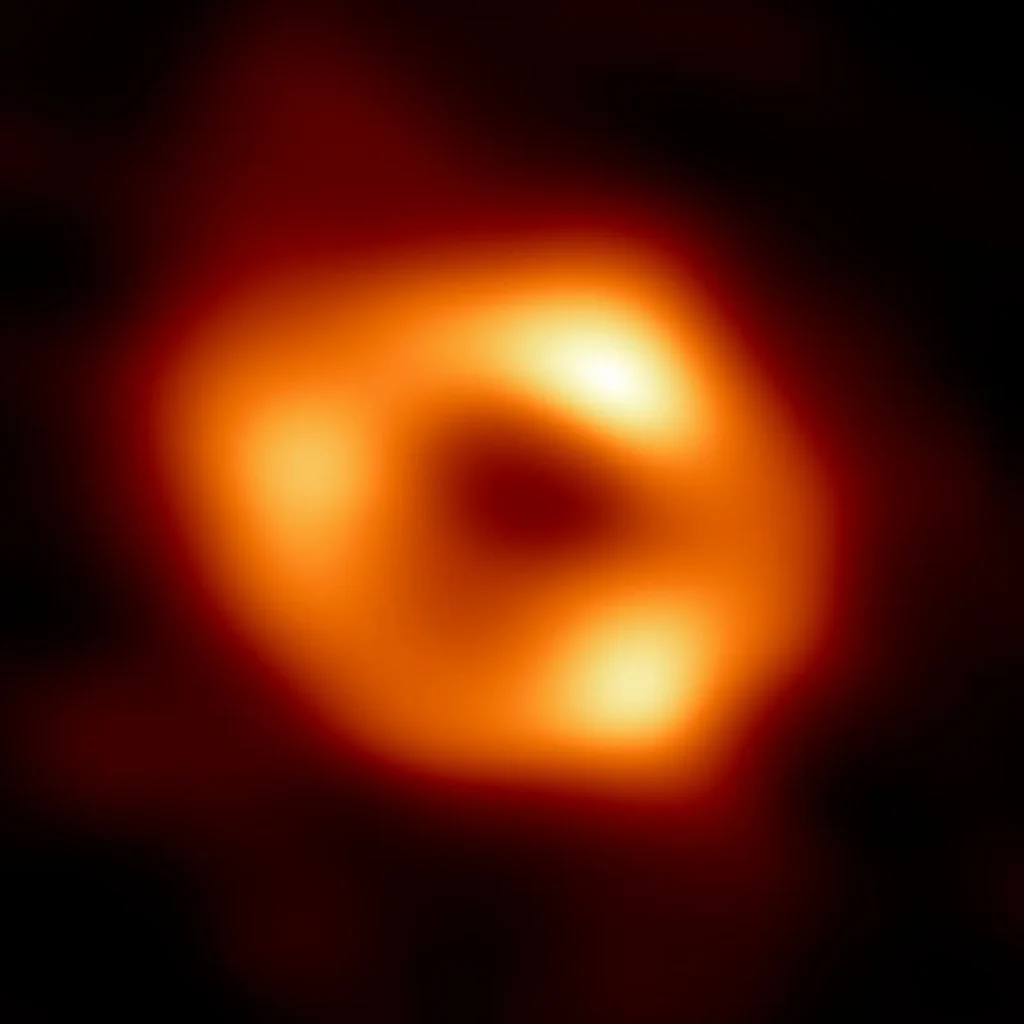
Not really holes and not cosmic vacuum cleaners, black holes are places where matter is packed so tightly that not even light can climb back out.
THE QUESTION LIBRARY THE UNIVERSE
Laser beams and the pulse times of distant stars reveal tiny, traveling changes in space and time.
Gravitational waves are traveling changes in space and time that very slightly stretch and squeeze distances. Laser detectors compare light paths in two long arms to measure them. Astronomers also time pulses from many spinning stellar remnants to look for much slower waves. Agreement across detectors or across pulsar pairs, together with careful noise checks, separates a cosmic signal from disturbances in the measuring system.
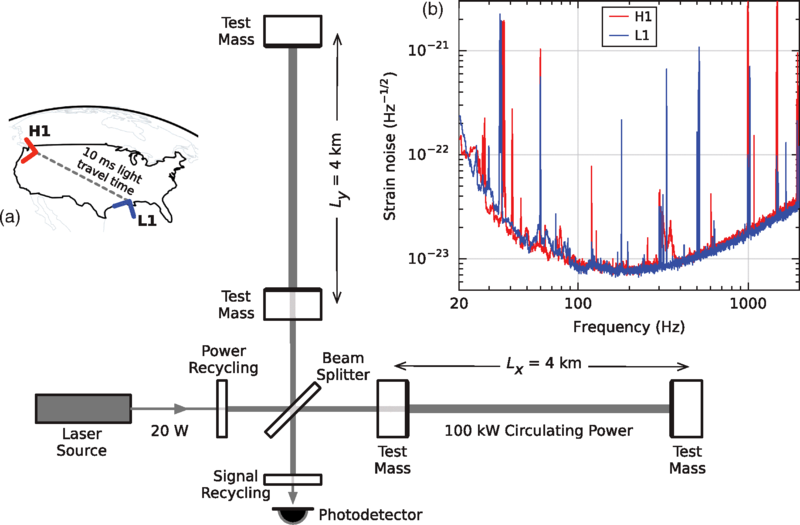
Simplified Advanced LIGO detector diagram, not to scale · Insets show site locations and historical noise-sensitivity curves from the first detection’s 2016 paper. The curves are not an event waveform, and the labeled powers are not a statement of current hardware settings.
WHERE THE EVIDENCE STANDS
WHAT WE DON’T KNOW YET
The exact mix of sources behind the very slow gravitational-wave background is still being studied. A background signal does not identify each individual black-hole pair.
WHAT WOULD CHANGE THIS ANSWER
A stronger explanation for the same signals would need to match the measured patterns and survive the detector and noise checks. More pulsar data and better models can change what we infer about the slow background’s sources without undoing the established laser detections.
Gravitational waves are small, traveling changes in space and time. As a wave passes, distances can stretch in one direction and shrink in another. Scientists detect these changes with laser beams on Earth and, for much slower waves, with pulses from distant stars. The waves are real; they have been measured.
Picture dots drawn in a circle that briefly becomes a tall oval, then a wide one. That is a sketch of one simple wave pattern, not a picture of material floating through space. Space and time are not a sheet of cloth. The useful part of the sketch is the changing distance between the dots.
LIGO uses two long arms at right angles. Laser light travels along both, reflects from mirrors and comes back together. A passing wave changes the two light paths by tiny, different amounts. The way the returning light combines reveals that change. One detector alone has a harder job telling a cosmic signal from a local disturbance, so scientists compare distant instruments and their noise records.
The famous black-hole “chirp” is this measured pattern turned into sound for our ears. It is not a microphone recording sound crossing empty space. As two black holes spiral together, their wave pattern speeds up. Playing that pattern through a speaker makes the pitch rise.
Other waves change too slowly for that approach. Astronomers instead track the regular radio pulses of many spinning stellar remnants called pulsars. A wave can make those pulses arrive slightly early or late. The test is a shared pattern across stars in different directions, not one late tick. Laser detectors and pulsar timing study different parts of the same physical phenomenon.
THE LONG ANSWER · ABOUT 5 MINUTES
The short answer, how sure we are, what we don’t know, what would change our mind and every source stay free on every page, for everyone.
All Access members read the long answer: the evidence piece by piece, the strongest objections, and how to check it yourself.
Join All Access · $1 a week Or $6 a month
Billed $52 once a year. Cancel anytime in your account.
Until December 4, 11:59 pm Pacific: the Founding rate is $39 a year, and it stays $39 while you stay a member.
Create a free account: 6 long answers a month, email only.
Paying never buys a different answer. Our Paywall Promise
Is gravity a force, or a bend in space and time?
Both: gravity acts as a force in Newton’s model and as curved space and time in Einstein’s.
God Plays Dice answers big questions in plain words, with sources and one of six honest labels.
See a mistake? Report a problem. Corrections are made openly.
CONTINUE THE THREAD
The UniverseExplainer
Not really holes and not cosmic vacuum cleaners, black holes are places where matter is packed so tightly that not even light can climb back out.
The UniverseAnswer
Two stars can circle each other while a planet travels around them both. Astronomers confirmed it by watching the moving stars dim.
The UniverseAnswer
An everywhere-present field, a fleeting particle and a famous nickname. What did CERN’s experiments actually measure?
The Architect AI companion · All Access
Labels describe the evidence for a claim, not the people who hold it.
Match my phone uses your device’s light or dark setting.