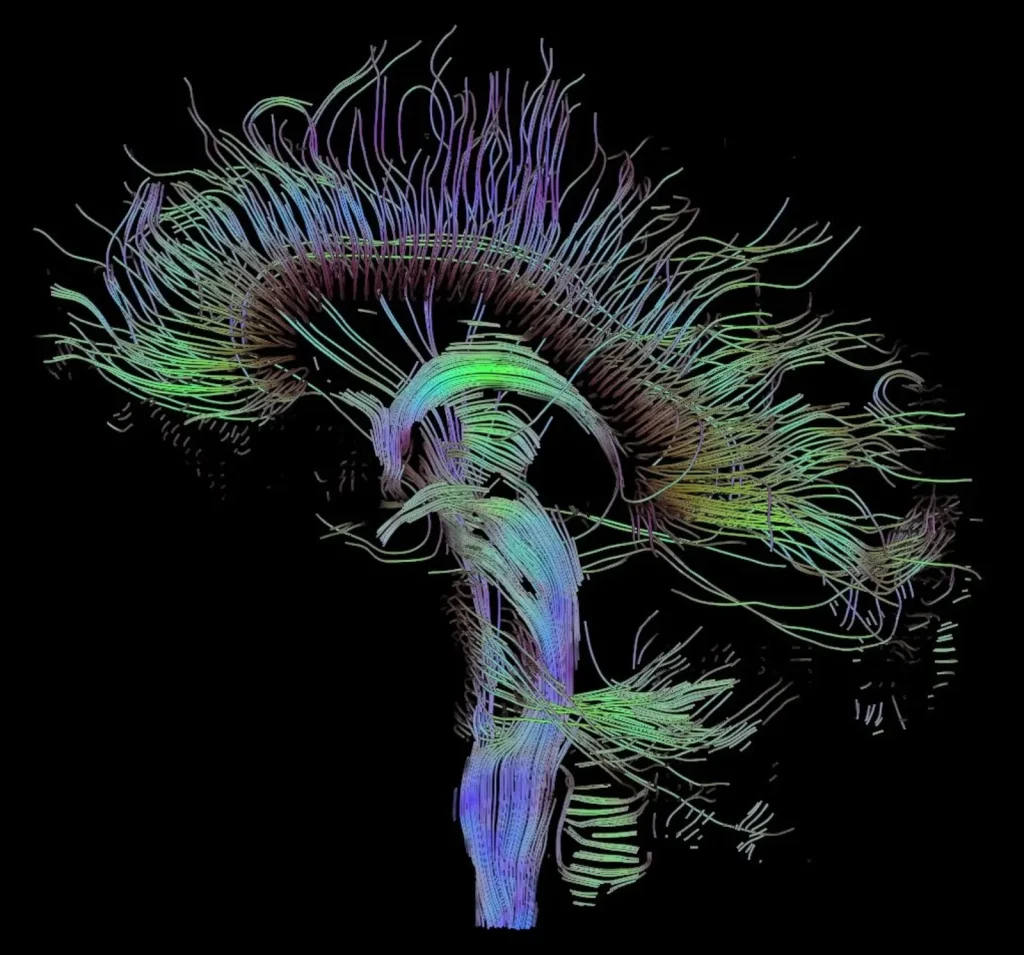
Brain science shows the mind depends on the brain, but whether the mind is the brain and nothing more is still an open question.
God Plays Dice Editorial · independently fact-checked · corrections welcomeChecked Sep 26, 20269 min read
THE SHORT ANSWER
Nobody knows yet. What is clear is that the mind depends on the brain. Damage or stimulate part of the brain, and what people see, feel or do can change. What is not clear is whether the mind is the brain and nothing more. Science still cannot explain why brain activity feels like something from the inside. In a 2020 survey, about half of the philosophers who answered leaned toward the view that the mind is fully physical, and about a third leaned the other way.
Brain injuries and brain stimulation can change what people see, feel and do, so the mind depends on a working brain.
In 1995 the philosopher David Chalmers named the “hard problem”: why brain activity comes with felt experience at all.
In the 2020 PhilPapers Survey, 51.9% of the philosophers who answered leaned toward physicalism about the mind, and 32.1% leaned against it.
A 25-year bet that science would find how the brain makes consciousness by 2023 ended with the philosopher declared the winner.
Phineas Gage, the famous brain-injury patient, seems to have adapted far better in later years than the popular story says.
About this picture
Phineas Gage, holding the iron rod that passed through his head in 1848. Smithsonian magazine calls his the first case to suggest a link between brain injury and personality change, though later retellings exaggerated how he changed.
Photograph by Jack and Beverly Wilgus of a daguerreotype from their collection; enlarged and retouched by Joe Haythornthwaite; via Wikimedia Commons · CC BY-SA 3.0 · Image source ↗
WHERE THE EVIDENCE STANDS
How sure are we?
The mind depends on the brain: changing the brain changes the mind.Stanford Encyclopedia of Philosophy (neuroscience of consciousness): blindsight after damage to visual cortex, loss of face perception after fusiform damage, Penfield’s stimulation hallucinations; Parvizi et al. 2012 (J. Neurosci.) face distortion from stimulation; the Phineas Gage case (Smithsonian, 2010).
Science has explained how brain activity produces felt experience.Chalmers 1995 set out the hard problem; Nature (2023) reports Koch conceded his 1998 bet that the mechanism would be found by 2023; a 2025 Nature study of 256 people challenged key ideas of two leading theories.
The mind is the brain and nothing more.2020 PhilPapers Survey (Bourget and Chalmers): 51.9% physicalism, 32.1% non-physicalism, 15.9% other among philosophers who answered; the Stanford Encyclopedia describes physicalism and dualism as live, debated positions.
A soul exists that can go on without the brain.The Stanford Encyclopedia’s entry on dualism traces belief in a soul that survives death to the earliest written sources. Brain research shows how the mind depends on the brain in life; it offers no test for a non-physical soul.
Phineas Gage stayed an ill-tempered, shiftless drifter for the rest of his life.Macmillan and Lena (2010, Neuropsychological Rehabilitation) conclude he made a surprisingly good adjustment; Smithsonian (2010) reports that later accounts went far beyond his doctor’s notes.
Nobody knows how brain activity gives rise to felt experience, or which brain processes are the key ones. Whether the mind is fully physical is still an open debate among experts.
WHAT WOULD CHANGE THIS ANSWER
A tested theory that explains and predicts why some brain activity feels like something would push the answer toward physicalism. Strong, repeatable evidence of a mind working without brain activity would push the other way.
Nobody knows yet. But part of the answer is clear. Your mind depends on your brain. When an injury damages part of the brain, people can lose the power to see faces as faces, to see part of the world in front of them, or to stick to their plans. When surgeons stimulate the brain with electricity, patients can see things that are not there. So thoughts and feelings are tied closely to brain activity. We label that part Established.
The open part is a bigger question. Is the mind the brain and nothing more? Or is there something extra, which many traditions call a soul? People ask this for many reasons. Some have watched someone they love change after a brain injury. Some grew up believing in a soul and wonder if brain science has ruled it out. Others simply wonder how living tissue can feel joy.
Here is the puzzle. Scientists can study how the brain notices things, pays attention and steers the body. That work is hard, but it is moving forward. What they have not explained is why any of it feels like something from the inside: the blue of the sky, the sound of a song. In 1995, the philosopher David Chalmers called this the “hard problem” of consciousness. It is still unsolved.
Experts are split. In a 2020 survey of professional philosophers, 51.9% of those who answered leaned toward physicalism. That is the view that the mind is fully physical. Another 32.1% leaned the other way. Those numbers tell us what one group of experts thinks. They do not settle the question.
So the honest answer has three parts. The mind depends on the brain: Established. Whether the mind is only the brain: Open question. Whether a soul exists beyond the body: Beyond science. You are welcome here, whatever you believe.
THE LONG ANSWER
THE LONG ANSWER · ABOUT 7 MINUTES
You’ve read your 3 free long answers this month.
The short answer, how sure we are, what we don’t know, what would change our mind and every source stay free on every page, for everyone.
All Access members read the long answer: the evidence piece by piece, the strongest objections, and how to check it yourself.
The view that everything, including the mind, is physical or rests completely on physical things.
Dualism
The view that mind and body are, in some basic way, two different kinds of things.
Hard problem of consciousness
David Chalmers’s name for the puzzle of why brain processing comes with felt experience at all.
Neural correlate of consciousness
Brain activity that goes along with a particular conscious experience. Finding one is a step toward an explanation, not the explanation itself.
Blindsight
A condition after damage to the visual cortex in which people react to things they say they cannot see.
Psychological continuity
The idea that you stay the same person because your memories, beliefs and character carry forward over time.
Sources & further reading
(10) · Checked Sep 26, 2026
Facing Up to the Problem of Consciousness ↗David J. Chalmers, Journal of Consciousness Studies 2(3):200–19 (1995)Defines the easy problems (discrimination, integration, reportability, attention, control of behavior, wake and sleep) and the hard problem of experience; the “century or two” remark; the deep blue and clarinet examples. Physicalist reply that the explanatory gap may reflect the limits of current theorizing: SEP “Consciousness” (https://plato.stanford.edu/entries/consciousness/), citing Dennett 1991.
Philosophers on Philosophy: The 2020 PhilPapers Survey ↗David Bourget and David J. Chalmers, Philosophers’ Imprint (2023)Survey run Oct. 15 to Nov. 16, 2020; 7,685 in the target population, 1,785 (23%) completed. Mind: physicalism 51.9%, non-physicalism 32.1%, other 15.9%. Hard problem: yes 62.4%, no 29.8%. Personal identity: psychological 43.7%, biological 19.1%, further-fact 14.9%.
Dualism ↗Stanford Encyclopedia of Philosophy (rev. 2025)Definitions of dualism; materialism as the view that mind and body are both ultimately physical, and idealism as reducing the material to the mental (Leibniz, Berkeley); definitions of substance and property dualism, interactionism and hylomorphic dualism; dualism second most popular view after materialism; Elizabeth of Bohemia’s question to Descartes; causal closure debate; early belief in a soul surviving death (Gilgamesh, Homer, Hebrew Bible); Aquinas on the immaterial soul.
Personal Identity ↗Stanford Encyclopedia of Philosophy (rev. 2023)Three main answers to the persistence question: psychological-continuity views (endorsed in some version by most philosophers writing on personal identity since the early 20th century), brute-physical views (same body or organism), and anticriterialism.
The Neuroscience of Consciousness ↗Stanford Encyclopedia of Philosophy (rev. 2024)Neural correlates of consciousness as an early step; blindsight after V1 lesions, including a patient walking around unseen obstacles; prosopagnosia after fusiform face area lesions; Penfield’s stimulation-induced hallucinations.
Phineas Gage: Neuroscience’s Most Famous Patient ↗Smithsonian magazine (January 2010)Sept. 13, 1848, Cavendish, Vermont; age 25; rod 43 inches, 13.25 pounds; Harlow’s “no longer Gage”; stable in New Hampshire, coaches in Chile; died May 1860 at 36; later accounts went beyond Harlow’s notes.
Rehabilitating Phineas Gage ↗Malcolm Macmillan and M. L. Lena, Neuropsychological Rehabilitation 20(5):641–58 (2010)Re-examined evidence strongly implies Gage eventually made a surprisingly good psychosocial adaptation to his injury.
Why death can feel frightening: loss, separation, uncertainty and the dying process, with clear limits on psychological explanations.
Supported, still debated3 min read
THE OCCASIONAL LETTER
Stay curious.
New stories, book updates, and notes from God Plays Dice, delivered when there is something worth sharing.
EMAIL UPDATES ↗
500 DIGITAL COPIES • GIVEAWAY PREVIEW
Be first to know when the 500-copy reader giveaway opens.
Join for the book launch, verified retailer links, and the announcement for a planned giveaway of 500 digital copies. The giveaway is not open yet: dates, eligibility, a dedicated entry form, and Official Rules will be published first.
Privacy · Check your inbox to confirm your subscription. Newsletter signup alone is not a giveaway entry.