The part we can see has a limit, space looks flat, and flat can still mean finite, so here is what the evidence says and why the final answer may stay out of reach.
God Plays Dice Editorial · independently fact-checked · corrections welcomeChecked Sep 26, 20268 min read
THE SHORT ANSWER
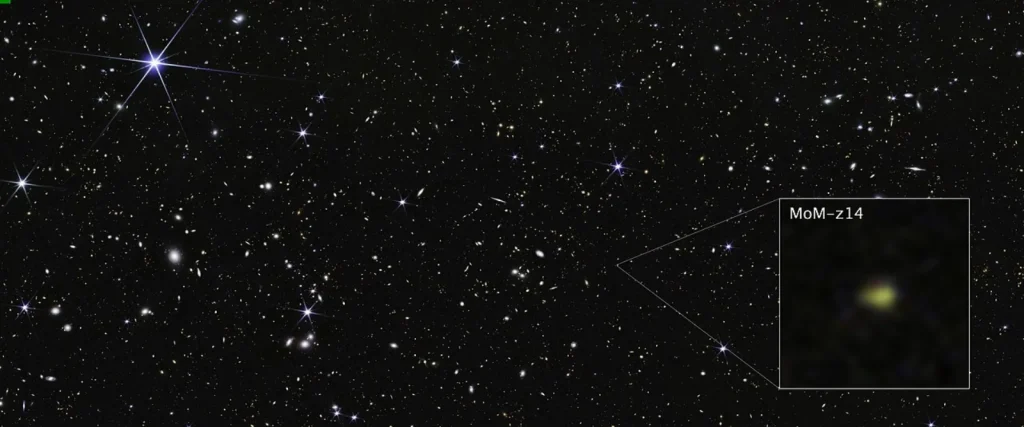
Nobody knows yet. The part we can see, called the observable universe, is finite. Its edge is now about 46 billion light-years away in every direction. The whole universe is much bigger than that. Careful measurements show that space is flat, or very close to flat. A flat universe could go on forever. But it could also be finite and wrap around on itself, like a video game screen. We may never be able to tell which.
The observable universe is a bubble around us whose edge is now about 46 billion light-years away.
Its size is set by how far light has had time to travel since the Big Bang, not by where the universe stops.
The Planck satellite, together with maps of galaxies, found that space is flat to within about 0.2%.
Flat does not have to mean infinite, because a flat space can loop back on itself and still have a finite size.
Searches have found no sign of such a loop smaller than the part of the universe we can see, for the shapes tested so far.
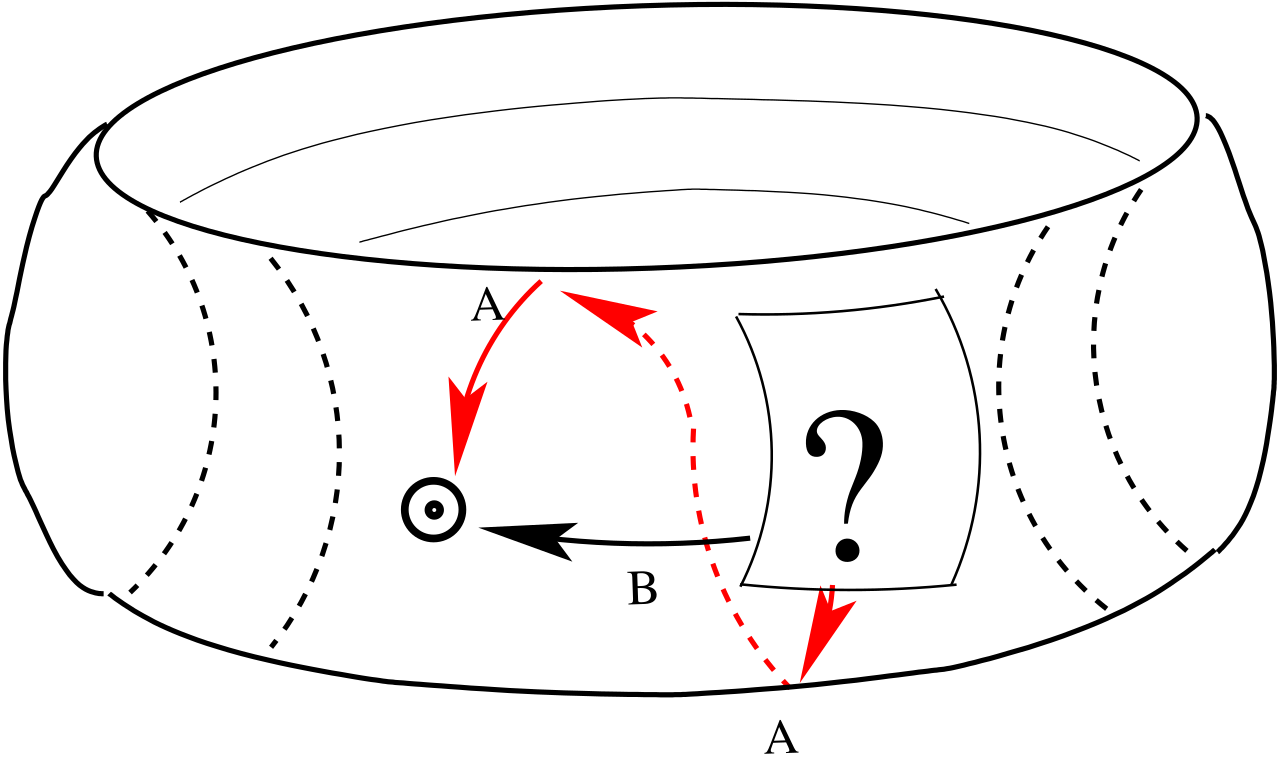
About this picture
A two-dimensional picture of a finite space with no edge. Light from the object marked “?” can reach the observer by a short path (B) or by going all the way around (A), so the same object could appear twice. Astronomers have searched the sky for this kind of repeat on a cosmic scale and, for the shapes tested so far, have not found one.
The part of the universe we can observe is finite, reaching about 46 billion light-years in every direction.Astronomers Tamara Davis and Charles Lineweaver (2004) give about 46 billion light-years as the present distance to the edge of what we can see; a NASA expert gives about 92 billion light-years across.
On the largest scales, space is flat or very close to flat.Planck 2018 results combined with galaxy maps (BAO): flat to within about 0.2%. NASA’s WMAP team had found flatness within 0.4%. Planck data taken alone leaned slightly toward a closed shape, which is still discussed.
Because space is flat, the universe must be infinite.Einstein’s theory describes the local shape of space, not how it connects overall. Researchers list flat shapes of finite size, such as the three-torus. NASA’s Ask an Astrophysicist answered “No” to whether WMAP proved an infinite universe.
The whole universe goes on forever.A NASA expert says we do not know if the universe is finite or infinite. A 2009 study found the odds of an infinite universe fall between 67% and 98%, depending on assumptions, and argued curvature below a tiny level may never be measurable.
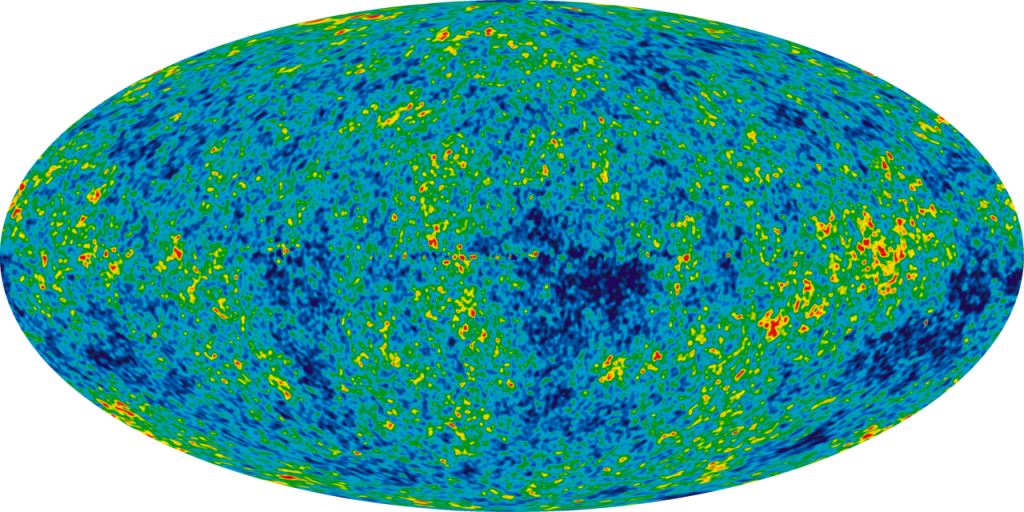
The universe wraps around on a scale smaller than the part we can see.Planck searched the microwave background for repeating patterns and found no sign of such a loop for the shapes it tested. Researchers note that many other possible shapes have not been fully tested yet.
Nobody knows whether space goes on forever, curves back on itself very gently, or wraps around in a loop larger than what we can see. Searches for wrap-around shapes have not yet tested every possible shape.
WHAT WOULD CHANGE THIS ANSWER
A clear sign of curvature would change this answer: a slight closed curve would mean a finite universe. Matching patterns in the oldest light in the sky would show a wrap-around universe with a definite size.
Nobody knows yet. That is the honest answer, and it is a good one. What we do know is where our view ends. The part of the universe we can see, called the observable universe, is a giant bubble around us. Its edge is now about 46 billion light-years away in every direction. A light-year is the distance light travels in one year, about 6 trillion miles. So the bubble we can see is finite. It is huge, but it has a size.
That edge is not a wall. It is a horizon, like the line where the sea seems to end. It marks how far light has had time to travel to us since the Big Bang, about 13.8 billion years ago. Space kept stretching while that light was on its way, so its starting points are now much farther than 13.8 billion light-years. The universe keeps going well beyond that horizon. We cannot see that part.
So is the whole thing infinite? Here scientists turn to the shape of space. Spacecraft have measured it with great care. The best result, from the Planck satellite together with maps of galaxies, is that space is flat to within about 0.2%. In flat space, the angles of a huge triangle add up to 180 degrees, just like on paper.
Many people hear “flat” and think “infinite.” The simplest flat universe does go on forever. But flat does not have to mean endless. A flat space can also wrap around, like an old video game where you walk off the right side of the screen and come back on the left. That kind of universe would be finite, with no edge at all.
So far, no one has seen signs of such wrapping. And if space curves only very gently, the curve may be too small to ever measure. We label the whole-universe question an Open question. The size of the part we can see is Established.
THE LONG ANSWER
THE LONG ANSWER · ABOUT 6 MINUTES
You’ve read your 3 free long answers this month.
The short answer, how sure we are, what we don’t know, what would change our mind and every source stay free on every page, for everyone.
All Access members read the long answer: the evidence piece by piece, the strongest objections, and how to check it yourself.
How Big is Space? We Asked a NASA Expert: Episode 61 ↗NASAObservable universe about 92 billion light-years across; the universe is probably bigger than what we can see; “we don’t actually know if the universe is finite or infinite.” Also: one light-year is about 6 trillion miles.
Planck 2018 results. VI. Cosmological parameters ↗Planck Collaboration, Astronomy & Astrophysics 641, A6 (2020); arXiv:1807.06209Abstract: joint constraint with BAO consistent with a flat universe, curvature 0.001 ± 0.002. Section 7.3: Planck TT,TE,EE+lowE alone gives an apparent detection of (closed) curvature; adding lensing and BAO gives 0.0007 ± 0.0019, flat to a 1-sigma accuracy of 0.2%. Conclusions: the model describes the Universe from 380 000 years after the Big Bang (the last-scattering surface seen in the CMB) to the present day at an age of 13.8 billion years. Section 7.3 also states that the base model assumes flat space.
WMAP: Shape of the Universe (Internet Archive copy, May 31, 2025) ↗NASA WMAP Science TeamClosed, open and flat geometries; spots about one degree across if flat; as of 2013, flat with a 0.4% margin of error; flatness “suggests” an infinite universe, but all we can truly conclude is that the universe is much larger than the volume we can observe. The live URL now redirects to the WMAP overview.
What is the shape of the universe? (WMAP) ↗NASA Imagine the UniverseSpherical, saddle and flat geometries explained with triangles; a one-degree angle between hot and cold spots points to flat space.
Ask an Astrophysicist: Cosmology questions ↗NASA Imagine the Universe“Did WMAP results prove an infinite universe?” Answer: No; there could be much more universe beyond what we see, which we cannot know about; the finite age has nothing to do with whether the universe is spatially infinite. Also: the Big Bang occurred everywhere all at once, the start of an expansion rather than an explosion.
Planck 2015 results. XVIII. Background geometry and topology of the Universe ↗Planck Collaboration, Astronomy & Astrophysics 594, A18 (2016); arXiv:1502.01593No detection of a compact topology at a scale below the diameter of the last-scattering surface; for the cubic torus the inscribed radius must exceed 0.97 of the distance to the last-scattering surface.
Promise of Future Searches for Cosmic Topology (COMPACT Collaboration) ↗Physical Review Letters 132, 171501 (2024); arXiv:2210.11426General relativity concerns only the local geometry, not topology; 18 Euclidean (flat) topologies, 17 of them nontrivial; the three-torus has finite volume; prior searches “have far from exhausted” the possibilities.
Several serious ideas in physics allow other universes, so here is what each one says, how scientists have tried to test them, and how a scientific braneworld differs from the multiverse in the movies.
Open question8 min read
THE OCCASIONAL LETTER
Stay curious.
New stories, book updates, and notes from God Plays Dice, delivered when there is something worth sharing.
EMAIL UPDATES ↗
500 DIGITAL COPIES • GIVEAWAY PREVIEW
Be first to know when the 500-copy reader giveaway opens.
Join for the book launch, verified retailer links, and the announcement for a planned giveaway of 500 digital copies. The giveaway is not open yet: dates, eligibility, a dedicated entry form, and Official Rules will be published first.
Privacy · Check your inbox to confirm your subscription. Newsletter signup alone is not a giveaway entry.