The UniverseExplainer
What Is Dark Energy?
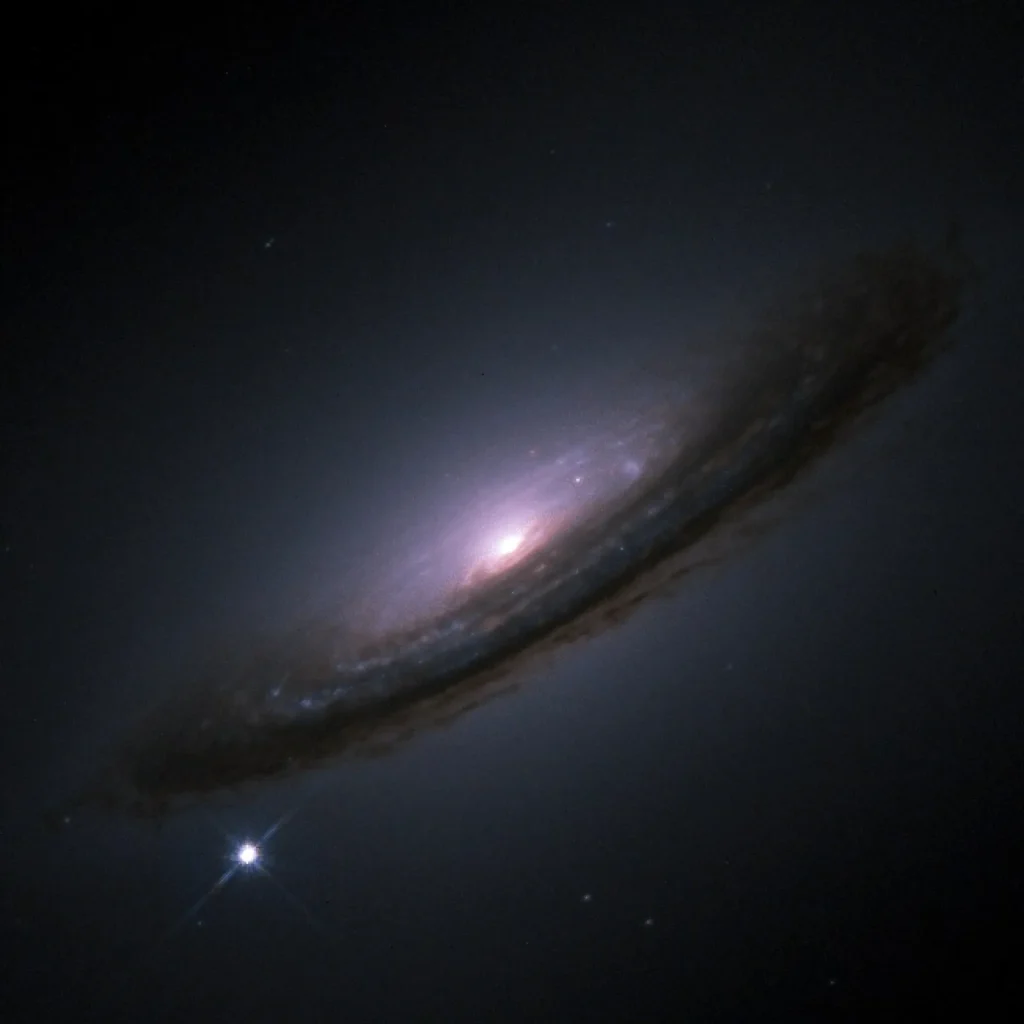
In 1998 astronomers found that the universe's expansion is speeding up, and "dark energy" is the name for a cause nobody yet understands.
THE QUESTION LIBRARY THE UNIVERSE
Removing matter does not remove the physical fields used to describe nature.
No single material is what empty space is made of. Real space contains some matter, light and fields. A quantum vacuum is the lowest-energy state of fields. It is a physical state. Tests measure quantum effects. Drawings of particles popping into view are not films of measured events. Atoms in laboratories can be colder than the cosmic background radiation. How vacuum energy fits with gravity is still unknown.
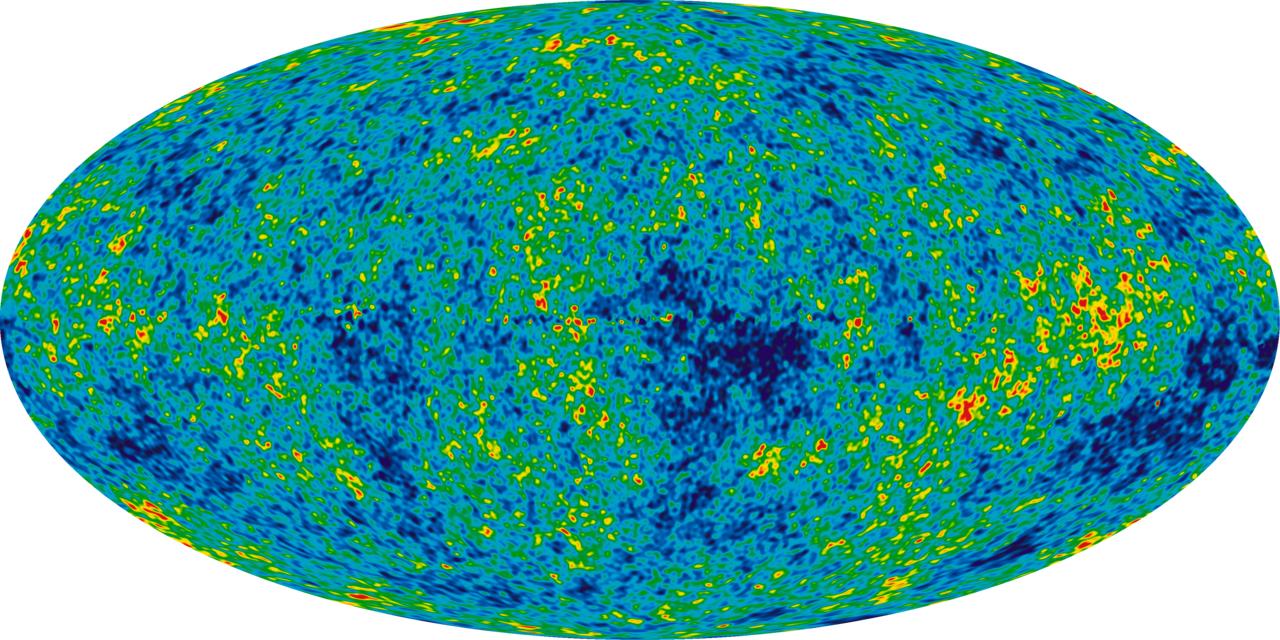
A map of the cosmic microwave background from WMAP. Its colors show small temperature differences in radiation that fills cosmic space; this is not a picture of the quantum vacuum.
WHERE THE EVIDENCE STANDS
WHAT WE DON’T KNOW YET
Nobody knows yet what dark energy is. We also lack a full tested account joining quantum fields with gravity.
WHAT WOULD CHANGE THIS ANSWER
A theory that explained cosmic expansion and passed new tests could clarify the vacuum’s role. If lab tests stopped matching today’s quantum rules, we would need to change those rules.
No single material is what empty space is made of. The phrase empty depends on what you have removed. Pump the air from a chamber and you get a vacuum, a region with very little gas. You have not removed space, physical fields or every trace of radiation.
Space between stars also contains scattered matter and light. It can be empty enough for some purposes without being absolute nothingness. This matters when a video moves from a statement about a vacuum to a claim about why anything exists. A physical vacuum is already part of a world with physical properties.
A field is a physical quantity described across space and time. A familiar magnetic field changes how a compass points. Modern particle theory uses quantum fields. Particles are excitations of those fields. An excitation is a state with more energy than the vacuum. Removing particles does not remove the framework that describes them.
The vacuum is the lowest-energy state in that framework. It has quantum properties that affect predicted measurements. Pictures of tiny particles appearing and disappearing can help introduce a calculation, but they should not be treated as a film of things that instruments have directly watched.
Cold is another word that needs care. The background microwave radiation has a temperature near 2.7 kelvin, a few degrees above absolute zero. Gas, dust and an object in sunlight can have different temperatures. Atoms in a laboratory can be cooled far below the background radiation’s temperature.
One deep puzzle remains. Vacuum energy should enter our account of gravity, yet theory does not naturally explain the small value associated with cosmic acceleration. That gap is real. It leaves an unanswered question about quantum fields and gravity, while laboratory tests still support many parts of quantum physics.
THE LONG ANSWER · ABOUT 6 MINUTES
The short answer, how sure we are, what we don’t know, what would change our mind and every source stay free on every page, for everyone.
All Access members read the long answer: the evidence piece by piece, the strongest objections, and how to check it yourself.
Join All Access · $1 a week Or $6 a month
Billed $52 once a year. Cancel anytime in your account.
Until December 4, 11:59 pm Pacific: the Founding rate is $39 a year, and it stays $39 while you stay a member.
Create a free account: 6 long answers a month, email only.
Paying never buys a different answer. Our Paywall Promise
Nobody knows yet what causes the large-scale expansion to accelerate.
God Plays Dice answers big questions in plain words, with sources and one of six honest labels.
See a mistake? Report a problem. Corrections are made openly.
CONTINUE THE THREAD
The UniverseExplainer
In 1998 astronomers found that the universe's expansion is speeding up, and "dark energy" is the name for a cause nobody yet understands.
The UniverseAnswer
Two stars can circle each other while a planet travels around them both. Astronomers confirmed it by watching the moving stars dim.
The UniverseAnswer
An everywhere-present field, a fleeting particle and a famous nickname. What did CERN’s experiments actually measure?
The Architect AI companion · All Access
Labels describe the evidence for a claim, not the people who hold it.
Match my phone uses your device’s light or dark setting.