Science can’t pick your values for you, but decades of research keep pointing to one thing: the people in your life.
God Plays Dice Editorial · independently fact-checked · corrections welcomeChecked Sep 26, 20269 min read
THE SHORT ANSWER
Nobody can settle this for everyone, because it depends on what you value. But the research points one way: good relationships. The Harvard Study of Adult Development has followed hundreds of men since 1938, and its director sums it up: “Good relationships keep us happier and healthier.” Money helps, most of all for people in hardship, but its link with daily mood is weak. Pleasure, purpose, virtue, faith and forgiveness all have serious defenders, and many people blend them.
Since 1938, the Harvard Study of Adult Development has followed 724 men, and those most satisfied in their relationships at 50 were the healthiest at 80.
The World Happiness Report ranks countries by how people rate their own lives from 0 to 10, and in 2026 Finland ranked first for the ninth year in a row.
In a 2023 joint study, researchers who had disagreed found that for most people, happiness keeps rising with income, but the link is weak.
Philosophers split happiness into feeling good (hedonic) and living well (eudaimonic), and they still disagree about which matters most.
In the U.S., 36% of people who belong to a religion and attend services at least monthly say they are very happy, compared with a quarter of others, but the cause is unclear.
About this picture
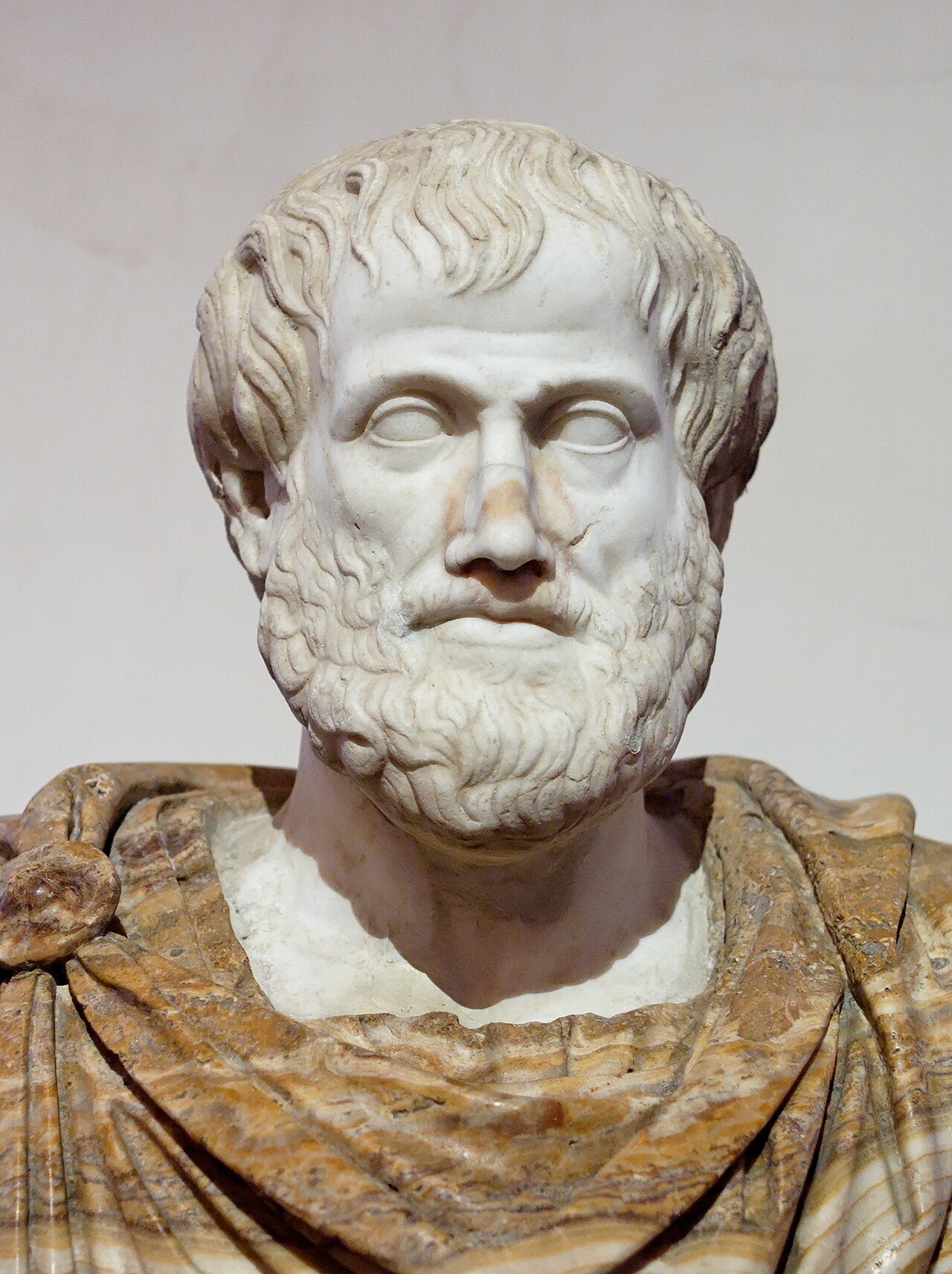
A Roman marble copy of a Greek bronze portrait of Aristotle, whose idea of eudaimonia, or living well, still shapes how philosophers and psychologists talk about a good life. The stone mantle is a modern addition.
Photo by Jastrow (2006), via Wikimedia Commons; bust after Lysippos, Palazzo Altemps, Rome · Public domain · Image source ↗
WHERE THE EVIDENCE STANDS
How sure are we?
People with warm, close relationships tend to be happier and healthier over a lifetime.The Harvard Study of Adult Development (since 1938; Harvard Gazette 2017 and Robert Waldinger’s 2015 TED talk) found relationship satisfaction at 50 predicted health at 80 better than cholesterol. The Stanford Encyclopedia of Philosophy lists supportive relationships among the chief correlates of happiness.
More money makes people happier from day to day.Killingsworth (PNAS 2021, 1.7 million reports) found feelings rise with income past $75,000. A 2023 joint reanalysis with Kahneman found the same for most people, with a flat line above $100,000 for the least happy 15 to 20%. The overall link is weak (correlation 0.09).
The boost from a big lottery win wears off within a short time.A preregistered study of Swedish lottery players (Review of Economic Studies, 2020) found large-prize winners were more satisfied with their lives 5 to 22 years later than matched controls. Effects on day-to-day happiness and mental health were smaller.
Learning to forgive can help the person who forgives.A 2014 meta-analysis of 54 reports (Wade and colleagues) found forgiveness programs led to more forgiveness and greater drops in depression and anxiety, and more hope, than no treatment.
What finally makes a life good is pleasure, virtue, love, or a relationship with God.The Stanford Encyclopedia of Philosophy’s entry on happiness says that calling a life happy in the well-being sense is a value judgment; its entries on Aristotle’s ethics and on the meaning of life set out Aristotelian and God-centered views of a good life.
Most of this research shows links, not causes. We don’t know how much close ties make people happy, and how much happy people find it easier to keep close ties. The Harvard Study also began with men only: Harvard students and young men from inner-city Boston.
WHAT WOULD CHANGE THIS ANSWER
Long-term studies or experiments showing that building relationships does not improve well-being would weaken the main finding. New data on money from outside the U.S., or better measures of daily feelings, could change the money numbers.
Nobody can answer this for everyone. What counts as a life well lived depends partly on what you value, and that is a question science can’t settle. But science can tell us what tends to go with a good life. On that, one answer keeps showing up: other people.
People ask this at big turning points. A new graduate wonders if chasing money is worth it. A parent wonders what really matters. Someone who has left their childhood faith wonders what can take its place. Someone who still believes wonders if science has anything to add. These are all fair questions.
Start with the longest study of its kind. In 1938, researchers began following 268 students at Harvard. A second group of 456 men from poor Boston neighborhoods was later added. They tracked these men for decades, with interviews, medical records and blood tests. The study’s director, the psychiatrist Robert Waldinger, put its clearest message plainly in a 2015 talk: “Good relationships keep us happier and healthier.” The men most satisfied with their relationships at age 50 were the healthiest at 80.
What about money? It helps, most of all when it lifts people out of hardship. In 2023, researchers who had reached different answers joined forces to reanalyze the data. They found that for most people, happiness keeps rising as income goes up. But they also found the link is weak.
Then there is the bigger question of what happiness even is. Philosophers point out two different ideas. One is feeling good. The other is living well: growing, doing good and caring for others. Many faiths add that a good life is lived in relation to God. Those are questions of value, so we label them Beyond science.
So here is the honest summary. Science can’t hand you a purpose. But whatever you believe, the evidence says the people in your life are a good place to invest.
THE LONG ANSWER
THE LONG ANSWER · ABOUT 7 MINUTES
You’ve read your 3 free long answers this month.
The short answer, how sure we are, what we don’t know, what would change our mind and every source stay free on every page, for everyone.
All Access members read the long answer: the evidence piece by piece, the strongest objections, and how to check it yourself.
Well-being as pleasant feelings: enjoying life and feeling good more than bad.
Eudaimonic well-being
Well-being as living well: meaning, growth, good relationships and using your abilities. The word comes from Aristotle’s eudaimonia, often translated as happiness or flourishing.
Life evaluation
How a person rates their whole life when they stop to think about it, often on a 0 to 10 ladder. The World Happiness Report uses this.
Longitudinal study
A study that follows the same people over many years, instead of taking one snapshot.
Adversarial collaboration
A study run jointly by researchers who disagree, who agree in advance on a fair test.
Correlation
A link between two things that tend to go together. It does not show which causes which, or whether either does.
Sources & further reading
(10) · Checked Sep 26, 2026
Good genes are nice, but joy is better (Liz Mineo) ↗Harvard Gazette (April 11, 2017)Study began in 1938 with 268 Harvard sophomores; 456 Boston inner-city men of the Glueck Study enlisted in the 1970s; women not in the original study; strong correlation between flourishing and relationships; relationship satisfaction at 50 a better predictor of physical health than cholesterol; Waldinger the fourth director. Also: Waldinger and Schulz, Psychology and Aging 2010, doi:10.1037/a0019087 (47 older couples over 8 days; marital satisfaction buffered day-to-day links between poorer perceived health and lower happiness).
What makes a good life? Lessons from the longest study on happiness (Robert Waldinger), transcript ↗TED (2015)724 men tracked for 75 years; “Good relationships keep us happier and healthier. Period.”; three lessons (connection vs loneliness, quality of close relationships, protection of the brain); high-conflict marriages perhaps worse than divorce; couples who bicker but can count on each other. Recorded Nov. 14, 2015 at TEDxBeaconStreet; happily partnered people in their 80s said their mood stayed just as happy on days with more physical pain.
World Happiness Report 2026: Complex global picture of social media and happiness ↗World Happiness Report, Wellbeing Research Centre, University of Oxford (March 19, 2026)14th edition; Finland first for a ninth year in a row, average 7.764; United States 23rd; rankings from a three-year average of life ratings, explained using GDP per capita, healthy life expectancy, having someone to count on, freedom, generosity and perceptions of corruption. FAQ (https://worldhappiness.report/faq/): the Cantril ladder question, 0 to 10, Gallup World Poll since 2005. The FAQ also says the six factors show lines of correlation rather than clean causal estimates.
Happiness (Dan Haybron) ↗Stanford Encyclopedia of Philosophy (revised 2020)Two senses of happiness (psychological vs well-being), the well-being sense a value judgment; hedonism, life satisfaction and emotional state theories; eudaimonic vs hedonic research; early set-point claims exaggerated; supportive relationships among the chief correlates (the entry says there is no definitive list); religion among significant correlates.
Aristotle’s Ethics (Richard Kraut) ↗Stanford Encyclopedia of Philosophy (revised 2026)Eudaimonia (happiness, flourishing) and eu zên (living well) as the highest end; health and wealth sought because they promote well-being; happiness as virtuous activity; Books VIII and IX on friendship. Also used: SEP “The Meaning of Life” (Thaddeus Metz, https://plato.stanford.edu/entries/life-meaning/) on the oldest and most influential God-based view, that a life is significant if it fulfills a purpose God has assigned.
Income and emotional well-being: A conflict resolved (Killingsworth, Kahneman and Mellers) ↗PNAS 120 (2023)Adversarial collaboration with Mellers as facilitator; flattening only for the least happy 15 to 20%, leveling off at $100,000; accelerating rise for the happiest; correlation 0.09; about five points on a 100-point scale between median happiness at $15,000 and $250,000. Full text via Europe PMC (PMC10013834). Also: Killingsworth, PNAS 2021, doi:10.1073/pnas.2016976118 (1,725,994 reports from 33,391 employed U.S. adults; no plateau above $75,000).
Efficacy of psychotherapeutic interventions to promote forgiveness: a meta-analysis (Wade, Hoyt, Kidwell and Worthington) ↗Journal of Consulting and Clinical Psychology (2014)54 published and unpublished reports; forgiveness treatments led to more forgiveness and greater changes in depression, anxiety and hope than no treatment; longer treatments predicted more change. Also: SEP “Forgiveness” (Luke Russell, https://plato.stanford.edu/entries/forgiveness/): the more common view is that one can forgive without reconciling.
Religion’s Relationship to Happiness, Civic Engagement and Health Around the World ↗Pew Research Center (2019)Actively religious = attend at least monthly; U.S.: 36% very happy vs 25% of inactive and unaffiliated; actives happier than the unaffiliated in 12 of 25 other countries; unclear whether the link is causal; social connection a likely factor; happier people may be more active.
Decades of research point to a surprising winner, other people, and give honest answers about money, gratitude, and the difference between pleasure and meaning.
You can pursue unanswered questions while caring for people and choosing worthwhile actions. Faith and trust overlap; neither requires pretending to know everything.
A valued practice, a feeling of comfort and a claim about luck need different kinds of assessment.
Supported, still debated7 min read
THE OCCASIONAL LETTER
Stay curious.
New stories, book updates, and notes from God Plays Dice, delivered when there is something worth sharing.
EMAIL UPDATES ↗
500 DIGITAL COPIES • GIVEAWAY PREVIEW
Be first to know when the 500-copy reader giveaway opens.
Join for the book launch, verified retailer links, and the announcement for a planned giveaway of 500 digital copies. The giveaway is not open yet: dates, eligibility, a dedicated entry form, and Official Rules will be published first.
Privacy · Check your inbox to confirm your subscription. Newsletter signup alone is not a giveaway entry.