God & BeliefEssay
Science and Faith: Enemies, Strangers, or Partners?
The 'war' between science and religion makes a dramatic story, but the real history, and what scientists actually believe, is more surprising and more welcoming.
THE QUESTION LIBRARY ORIGINS
Physics can trace the universe back a long way, but every answer starts with something already there, so here is what science, faith and philosophy each offer.
Nobody knows, and science alone may never be able to say. Physics traces our universe back to a hot, dense start about 13.8 billion years ago, and it has ideas about what came before. But every physics answer starts with something already there, such as laws, fields or energy. Why there is anything at all is a question for philosophy and faith. Many believers point to God. Others say the universe may simply exist. Careful thinkers stand on every side.
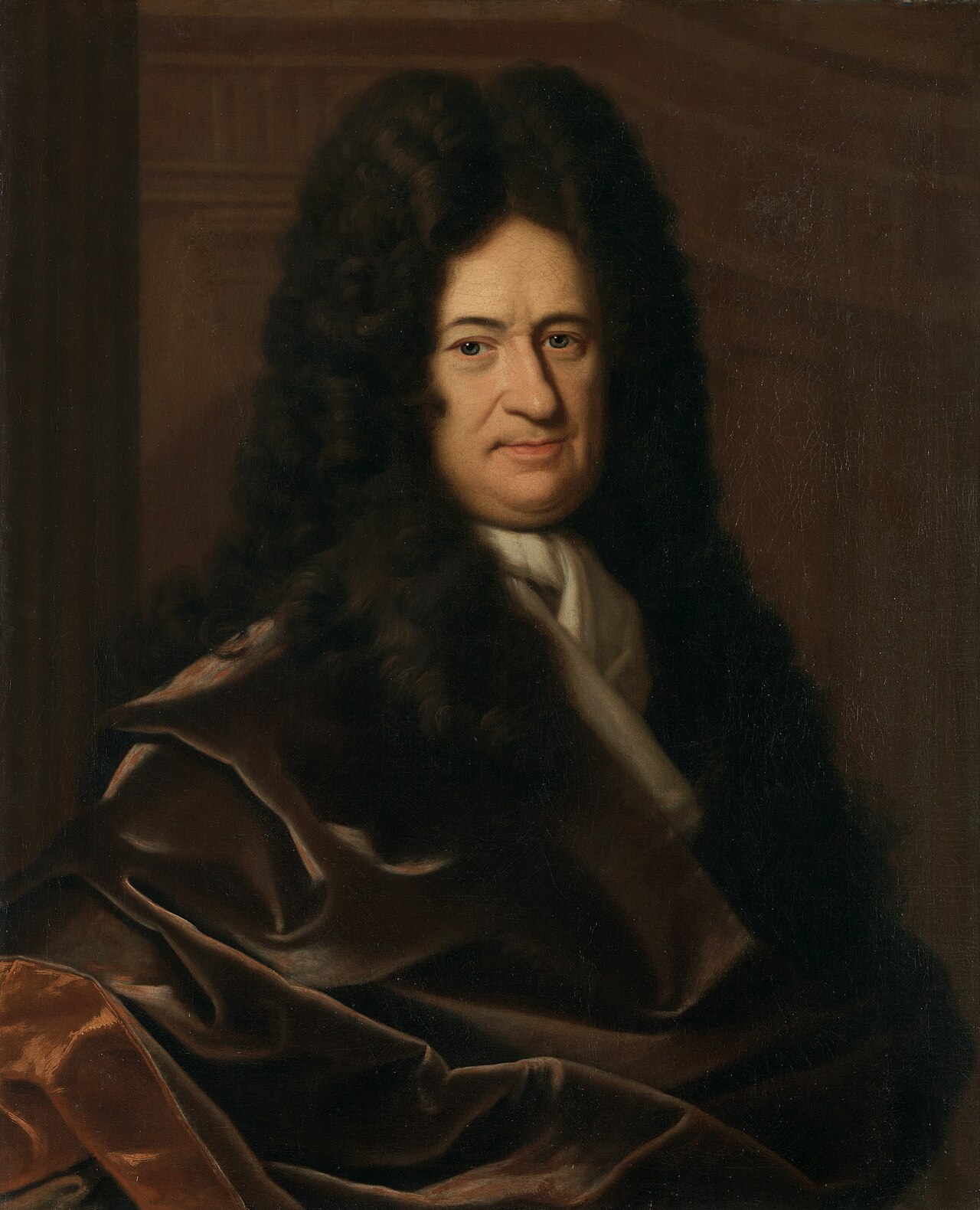
Gottfried Wilhelm Leibniz (1646–1716), painted around 1695 by Christoph Bernhard Francke. In 1714 Leibniz wrote that the first question we can fairly ask is why there is something rather than nothing.
WHERE THE EVIDENCE STANDS
WHAT WE DON’T KNOW YET
Nobody knows what, if anything, came before the hot early universe. Philosophers still disagree about whether the question has an answer at all, and whether that answer is God, a universe that must exist, or no reason.
WHAT WOULD CHANGE THIS ANSWER
A confirmed physics theory of what came before the Big Bang would push the science part of this answer further back. It would still start from laws or stuff that already exist, so the deepest question would stay outside science.
Nobody knows. It may be the biggest question there is, and science alone may never settle it. But we can say clearly what science has found, where it stops, and how people of faith and of no faith try to go further.
The question is old. In 1714, the German thinker Gottfried Leibniz wrote that the first question we can fairly ask is why there is something rather than nothing. After all, he said, nothing is simpler and easier than something. Leibniz believed everything has a reason. His answer was that the reason for the universe lies outside it, in God.
Many people hope physics will answer it instead. Physics has done a lot. It traces our universe back to a hot, dense state about 13.8 billion years ago. Many cosmologists think a sudden stretch of space, called inflation, came just before that. But NASA says scientists are not sure what came before inflation or what powered it.
Some physicists go further. They describe how a universe could appear from “nothing.” Look closely, though, and their “nothing” is something: empty space full of quantum fields and energy, ruled by laws of physics. Philosophers ask where the fields and laws came from. That is the real puzzle. Any answer that starts with something already there has not yet explained why there is anything at all.
So people answer in different ways. Many believers say God is the reason, a being that does not need a cause. Some skeptics say the universe may simply exist, with no further reason. Others think the question may have no answer that words can give. Each view has thoughtful defenders and serious critics.
We label the ultimate question Beyond science. That does not make it silly or off limits. It means experiments cannot decide it. You are welcome here, whatever you believe.
THE LONG ANSWER · ABOUT 8 MINUTES
The short answer, how sure we are, what we don’t know, what would change our mind and every source stay free on every page, for everyone.
All Access members read the long answer: the evidence piece by piece, the strongest objections, and how to check it yourself.
Join All Access · $1 a week Or $6 a month
Billed $52 once a year. Cancel anytime in your account.
Until December 4, 11:59 pm Pacific: the Founding rate is $39 a year, and it stays $39 while you stay a member.
Create a free account: 6 long answers a month, email only.
Paying never buys a different answer. Our Paywall Promise
WHERE THE AUTHOR’S RESEARCH TOUCHES THIS
Author’s hypothesis. In the Introduction to his book, Ricardo Maldonado, author of GOD PLAYS DICE, writes that his lifelong question began at age seven, lying awake and unable to stop asking why anything existed at all. His HD-Blast idea is a proposal about how our universe began: our hot beginning may be the aftermath of a brief release of energy in a higher-dimensional space. The book calls it a falsifiable hypothesis, which means specific future data could prove it wrong.
Even if that hypothesis turned out right, it would not answer the question on this page. The Introduction says the author cannot yet tell what released that energy, and that no one has observed such an event. In Chapter 2, he writes that even if time begins at the Big Bang, the question does not disappear: it becomes “why this beginning?” And in Chapter 10, he pictures the laws of physics as a table on which the dice roll. Like the other physics ideas on this page, the hypothesis starts from a larger stage that is already there. Why there is any stage at all stays beyond science.
Next on the path “Can I feel wonder without a creed?” · step 2 of 8
Night Is Just Earth’s Shadow, and We Are Stardust
Two ordinary truths—the turning of Earth and the atoms inside our bodies—can make the sky feel much closer than it did before.
See this path: Can I feel wonder without a creed?
God Plays Dice answers big questions in plain words, with sources and one of six honest labels.
See a mistake? Report a problem. Corrections are made openly.
CONTINUE THE THREAD
God & BeliefEssay
The 'war' between science and religion makes a dramatic story, but the real history, and what scientists actually believe, is more surprising and more welcoming.
OriginsAnswer
An earlier history needs a calculable path to a measurement that separates it from competing explanations.
OriginsAnswer
Several serious ideas in physics allow other universes, so here is what each one says, how scientists have tried to test them, and how a scientific braneworld differs from the multiverse in the movies.
The Architect AI companion · All Access
Labels describe the evidence for a claim, not the people who hold it.
Match my phone uses your device’s light or dark setting.