Why is it so hard to test ideas about what happened before the hot Big Bang?
An earlier history needs a calculable path to a measurement that separates it from competing explanations.
God Plays Dice Editorial · independently fact-checked · corrections welcomeChecked Oct 2, 20264 min read
THE SHORT ANSWER
We infer earlier history from later traces. A proposal must connect predicted patterns to measurements and distinguish alternatives. Different histories can share selected patterns, while foregrounds and noise complicate observation. These obstacles make particular tests difficult; they do not prove every earlier-history idea untestable.
Later photons can support indirect inference.
A transition must be calculated, not supplied by the word bounce.
Matching one spectrum need not identify one unique history.
A constraint depends on its model, dataset and assumptions.
WHERE THE EVIDENCE STANDS
How sure are we?
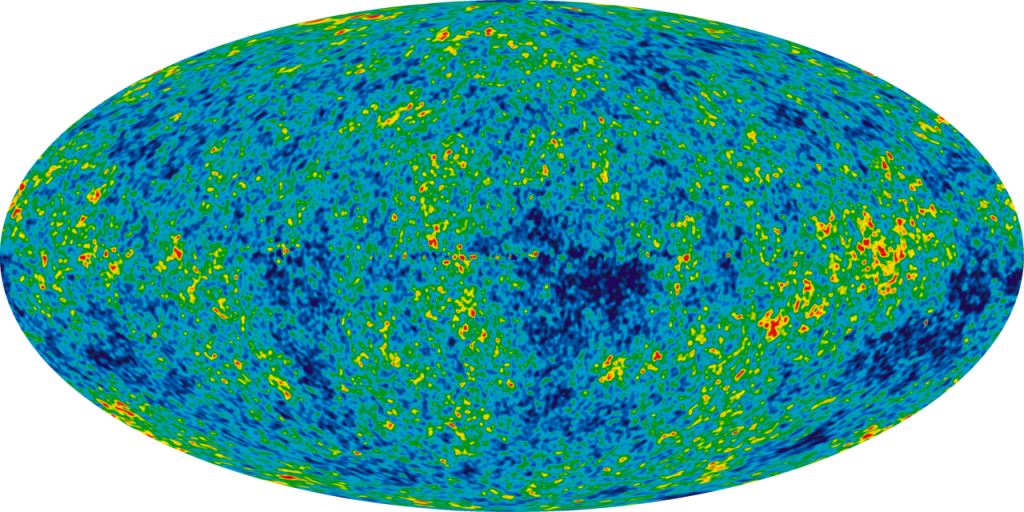
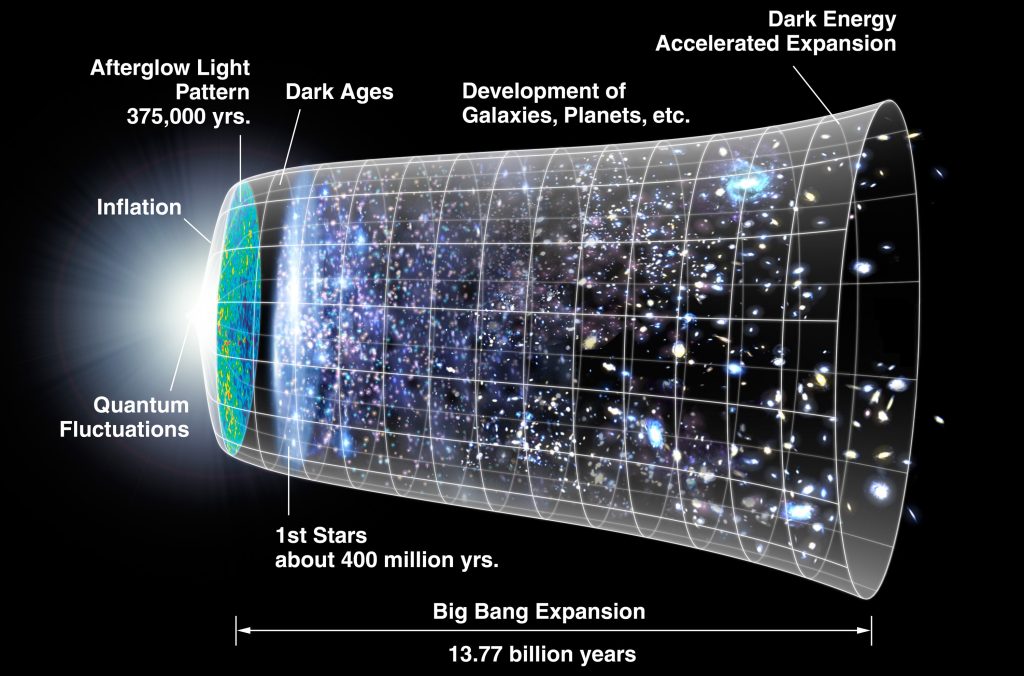
The cosmic microwave background (CMB) photographs the hot phase’s start.It records a later stage, as the early universe became transparent to light.
One matching spectrum identifies a unique earlier history.Wands’s 1999 example gives the same selected spectrum from different histories under specified conditions; it does not equate every observable.
The 2021 BICEP/Keck analysis detected primordial gravitational waves.Its dataset through the 2018 observing season yielded a conditional constraint, without significant evidence for a primordial gravitational-wave component.
A complete account of what preceded the hot phase is established.A proposed transition and its observable consequences need model-specific calculations and tests.
The relevant early physics and transition may remain incomplete. Which proposed histories can give controlled, distinguishable predictions depends on their particular assumptions.
WHAT WOULD CHANGE THIS ANSWER
A distinguishing prediction surviving independent checks would strengthen its model. One matching pattern would not establish a unique origin.
A telescope cannot directly photograph this earlier phase. In this answer, the hot Big Bang means the hot, expanding phase; an absolute first moment is a separate question. Read whether time began and the first-second timeline for that background.
The testing question is a chain: specify a model, calculate what reaches later observations, identify a distinguishing measurement, and check alternatives. A story about an earlier era becomes more useful when each link has an answer.
THE LONG ANSWER
THE LONG ANSWER · ABOUT 3 MINUTES
You’ve read your 3 free long answers this month.
The short answer, how sure we are, what we don’t know, what would change our mind and every source stay free on every page, for everyone.
All Access members read the long answer: the evidence piece by piece, the strongest objections, and how to check it yourself.
The hot, expanding phase, distinct from an absolute beginning.
Perturbation
A small variation whose evolution can be calculated in a specified model.
Spectrum
How the strength of a pattern varies with scale.
Foreground
A contribution, such as Galactic dust emission, that complicates inference about the sought signal.
Conditional constraint
A restriction obtained for particular data and model assumptions.
Sources & further reading
(6) · Checked Oct 2, 2026
The Universe’s History ↗NASA Science (updated August 12, 2026)Later photon record and indirect inference.
TASI Lectures on Inflation ↗Daniel Baumann (2009 lectures; v2 2012)Reheating, thermal history and transfer calculations; theoretical setup remains conditional.
Bouncing Cosmologies: Progress and Problems ↗Robert Brandenberger and Patrick Peter (2016)Transition control and implementation-dependent comparisons, not a discovered contraction.
Several serious ideas in physics allow other universes, so here is what each one says, how scientists have tried to test them, and how a scientific braneworld differs from the multiverse in the movies.
Many physicists say life depends on a few numbers of nature falling in narrow ranges, so here is what that means, why 137 is famous, and how design, many universes and luck each try to explain it.
Cosmic expansion means distances between faraway galaxies grow; it does not require a wall, an edge, or a room beyond space.
Established7 min read
THE OCCASIONAL LETTER
Stay curious.
New stories, book updates, and notes from God Plays Dice, delivered when there is something worth sharing.
EMAIL UPDATES ↗
500 DIGITAL COPIES • GIVEAWAY PREVIEW
Be first to know when the 500-copy reader giveaway opens.
Join for the book launch, verified retailer links, and the announcement for a planned giveaway of 500 digital copies. The giveaway is not open yet: dates, eligibility, a dedicated entry form, and Official Rules will be published first.
Privacy · Check your inbox to confirm your subscription. Newsletter signup alone is not a giveaway entry.