The UniverseExplainer
Why Is There More Matter Than Antimatter?
The Big Bang should have left an almost empty universe. A tiny surplus of matter built everything we know, and nobody yet knows why.
THE QUESTION LIBRARY THE UNIVERSE
The matter in every star and body may be the remnant of a tiny early imbalance whose cause remains unknown.
Nobody knows yet. The young universe had both matter and antimatter. When matching particles met, they turned much of their mass into energy. But matter seems to have had a small lead. CERN puts it at about one extra matter particle for every billion antimatter particles. That small surplus was left after most pairs met. It became the stuff in stars and our bodies. We have found some ways in which matter and antimatter differ, but they cannot yet explain the surplus.
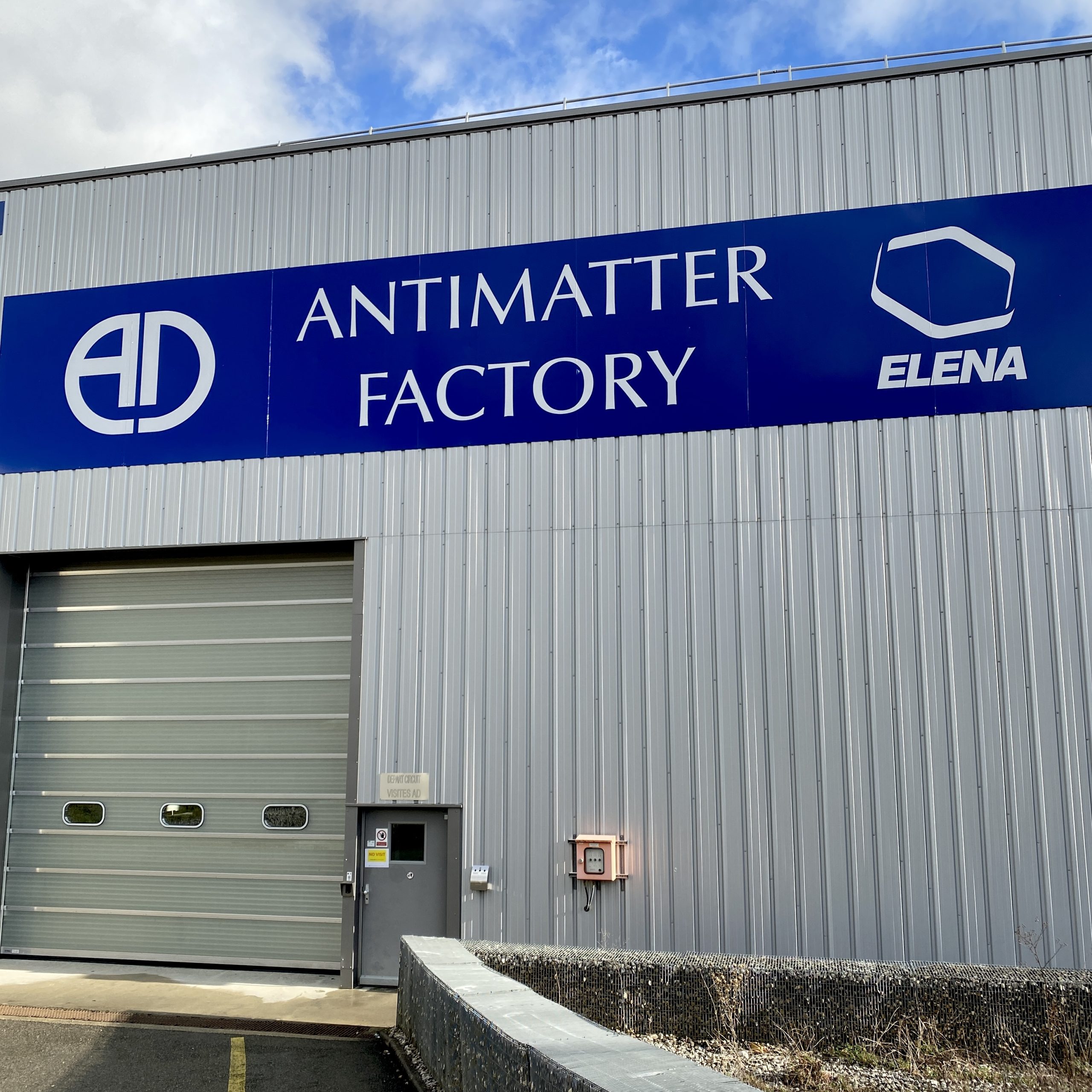
CERN's Antimatter Factory lets researchers study antiparticles. Laboratory antimatter is a clue to a question about the early universe, not a recreation of its conditions.
WHERE THE EVIDENCE STANDS
WHAT WE DON’T KNOW YET
We do not know what made matter get ahead. We also cannot watch the first moments of the universe as they happened.
WHAT WOULD CHANGE THIS ANSWER
A new idea must predict the size of the surplus and pass tests in labs and in space. Then it could explain why matter was left.
Nobody knows yet why any matter was left. This is a question about the young universe. It asks why matter did not cancel out with antimatter. Each matter particle has an antimatter partner. When the two meet, they can turn much of their mass into energy. CERN says the young universe had huge numbers of both kinds.
Here is an analogy. Picture two groups of people. Each person in one group leaves with a partner from the other group. If the groups match in size, no one stays. If one group has a few extra people, they stay after the rest leave. Real particles do not line up like people. Their meetings also make light and other particles. But the image shows how a tiny lead can leave a trace.
CERN says matter had about one extra particle for each billion antimatter particles. Most pairs met and were lost from the matter count. The small surplus became the matter in stars, planets and living things. This number helps us see the scale. It is not a head count made at the Big Bang.
Tests show that matter and antimatter do not always act alike. One form of this is called CP violation. It means a process can change when we swap particles for their antimatter partners and reverse left and right. In 2025, CERN's LHCb team found this kind of difference in a type of particle decay. But CERN says the effects in today's main particle theory are far too small to make the surplus we see. We know the matter is here. We do not yet know what gave it the lead.
THE LONG ANSWER · ABOUT 5 MINUTES
The short answer, how sure we are, what we don’t know, what would change our mind and every source stay free on every page, for everyone.
All Access members read the long answer: the evidence piece by piece, the strongest objections, and how to check it yourself.
Join All Access · $1 a week Or $6 a month
Billed $52 once a year. Cancel anytime in your account.
Until December 4, 11:59 pm Pacific: the Founding rate is $39 a year, and it stays $39 while you stay a member.
Create a free account: 6 long answers a month, email only.
Paying never buys a different answer. Our Paywall Promise
Why is there something rather than nothing?
Nobody knows, and science alone may never be able to say.
God Plays Dice answers big questions in plain words, with sources and one of six honest labels.
See a mistake? Report a problem. Corrections are made openly.
CONTINUE THE THREAD
The UniverseExplainer
The Big Bang should have left an almost empty universe. A tiny surplus of matter built everything we know, and nobody yet knows why.
The UniverseAnswer
Two stars can circle each other while a planet travels around them both. Astronomers confirmed it by watching the moving stars dim.
The UniverseAnswer
An everywhere-present field, a fleeting particle and a famous nickname. What did CERN’s experiments actually measure?
The Architect AI companion · All Access
Labels describe the evidence for a claim, not the people who hold it.
Match my phone uses your device’s light or dark setting.