Why do extraordinary claims need extraordinary evidence?
A claim that breaks with a mountain of past evidence has to climb that mountain first, so here is where the rule came from, when surprising claims won, when they failed, and how to use the rule fairly.
God Plays Dice Editorial · independently fact-checked · corrections welcomeChecked Sep 26, 20268 min read
THE SHORT ANSWER
Because a claim that clashes with a huge amount of well-tested evidence starts out unlikely, and it takes strong evidence to outweigh all of that. This is careful reasoning, not a ban on new ideas. Stones falling from the sky, drifting continents and a germ that causes ulcers all sounded extraordinary, and each was accepted once the evidence grew strong. Cold fusion in 1989 and faster-than-light neutrinos in 2011 failed the same test. The rule asks for better evidence, not for silence.
In 1748, the philosopher David Hume wrote that a wise person “proportions his belief to the evidence.”
Carl Sagan made the phrase famous: he was quoted saying it in 1977 and printed it in his 1979 book Broca’s Brain.
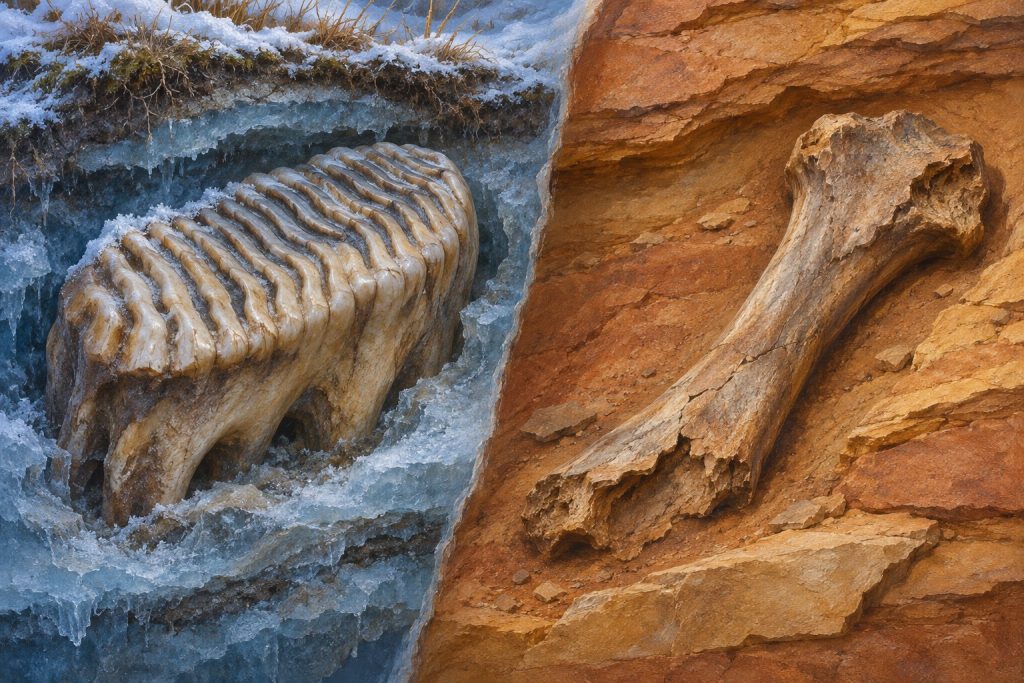
Meteorites, drifting continents and the ulcer germ Helicobacter pylori were all doubted at first, then accepted when the evidence grew strong.
Cold fusion (1989) and faster-than-light neutrinos (2011) did not hold up; the neutrino result came from a faulty part in a fiber-optic timing system.
In practice, strong evidence usually means results that independent teams can repeat, using different tools.
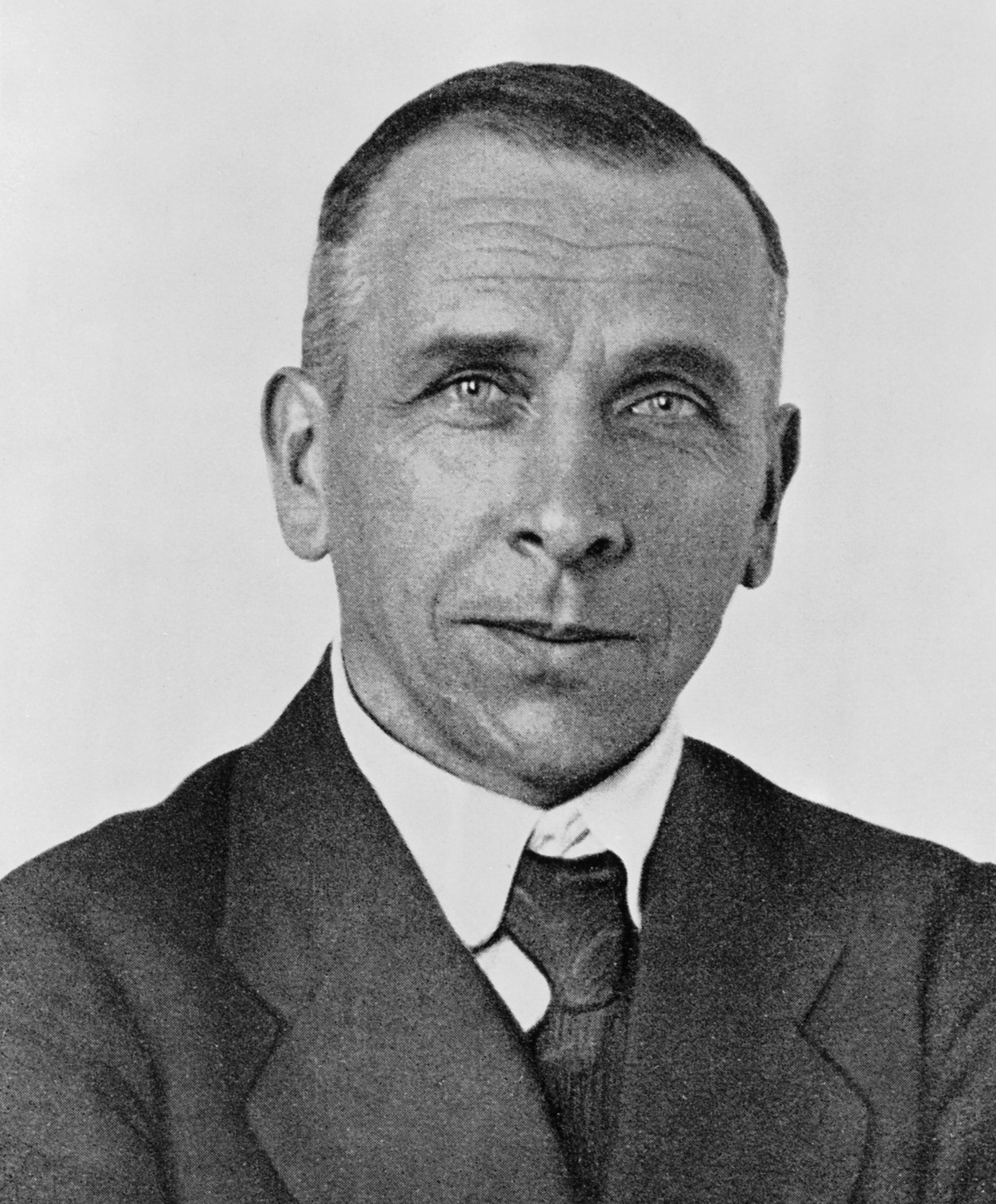
About this picture
Alfred Wegener, photographed between about 1924 and 1930. His 1912 idea that the continents move was not well received in his lifetime; new evidence from the ocean floor later revived it as plate tectonics.
Unknown photographer, via Bildindex der Kunst und Architektur and Wikimedia Commons · Public domain · Image source ↗
WHERE THE EVIDENCE STANDS
How sure are we?
The more a claim conflicts with well-tested knowledge, the stronger the evidence it needs before we accept it.Hume’s 1748 essay “Of Miracles” (a wise man proportions his belief to the evidence); Laplace’s probability version in the early 1800s; the Stanford Encyclopedia of Philosophy shows how Hume’s maxim can be read in the language of probability (starting odds times the strength of the new evidence).
Claims once called extraordinary have been accepted when strong evidence arrived.The 1803 meteorite fall at L’Aigle, France, and Jean-Baptiste Biot’s report (Buseck Center for Meteorite Studies; Gounelle 2003); continental drift and plate tectonics (U.S. Geological Survey); Helicobacter pylori and ulcers (2005 Nobel Prize in Physiology or Medicine).
The 1989 cold fusion experiments showed a new nuclear energy source working at room temperature.The U.S. Department of Energy’s review panel reported in November 1989 that most labs reported negative results, that labs claiming excess heat did not find matching fusion products, and that the evidence for a new nuclear process was not persuasive.
The OPERA experiment showed that neutrinos travel faster than light.CERN, June 8, 2012: four experiments at Italy’s Gran Sasso lab measured neutrino speeds consistent with the speed of light, and the original result was traced to a faulty fiber-optic timing part.
There is one agreed, exact definition of how “extraordinary” a claim must be before it needs extra evidence.David Deming (Philosophia, 2016) points out that Sagan never defined “extraordinary,” and the Stanford Encyclopedia of Philosophy reports that readings of Hume’s maxim are still disputed.
There is no agreed, exact line for when a claim counts as “extraordinary.” Deciding how unlikely a claim is at the start always takes some judgment, and philosophers still debate how best to read Hume’s argument.
WHAT WOULD CHANGE THIS ANSWER
If surprising claims turned out to be right about as often as ordinary ones, the extra caution would stop making sense. History shows surprising claims that won and ones that failed, which is why the rule asks for stronger evidence rather than a quick yes or no.
The short answer is this. A claim that clashes with a lot of well-tested knowledge starts out unlikely. To believe it, you need evidence strong enough to outweigh everything that points the other way. That is what people mean when they say that extraordinary claims require extraordinary evidence.
People ask about this rule for different reasons. Some hear it quoted when they share a UFO video or a story about a healing, and it feels like a door slammed in their face. Others use it as a handy tool for sorting good claims from weak ones. Both reactions make sense. The rule can be used well, and it can be misused.
The idea is old. In 1748, the philosopher David Hume wrote that a wise person “proportions his belief to the evidence.” The astronomer Carl Sagan made the modern phrase famous in the late 1970s. He printed it in his 1979 book Broca’s Brain, and in the same passage he wrote that the extraordinary should be pursued. In other words, he wanted strange ideas checked, not ignored.
Here is a simple way to picture it. If a friend says she saw a deer in the park, you believe her. If she says she saw a tiger, you want a photo, a news report, or a call from the zoo. She is the same honest friend. The claim is what changed. (This is an analogy, and it breaks down in one way: in science, the “zoo” is usually a set of careful tests that other teams can repeat.)
History shows the rule works in both directions. Scientists once doubted that stones fall from the sky, that continents move, and that a germ causes most stomach ulcers. Strong evidence changed their minds. Cold fusion in 1989 and faster-than-light neutrinos in 2011 got the same hard look and did not survive it. The reasoning behind the rule is Established. How strictly to apply it in a given case still takes judgment.
THE LONG ANSWER
THE LONG ANSWER · ABOUT 6 MINUTES
You’ve read your 3 free long answers this month.
The short answer, how sure we are, what we don’t know, what would change our mind and every source stay free on every page, for everyone.
All Access members read the long answer: the evidence piece by piece, the strongest objections, and how to check it yourself.
Miracles (Timothy McGrew and Robert Larmer) ↗Stanford Encyclopedia of PhilosophyHume 1748; the maxim is open to interpretive disputes; a Bayesian reading (prior odds times the likelihood ratio); Babbage (1837): enough independent witnesses who are more often right than wrong can outweigh an improbable claim; the independence assumption is contested (Ahmed 2015).
Do Extraordinary Claims Require Extraordinary Evidence? (David Deming) ↗Philosophia 44 (2016), open access (PMC6099700)Sagan popularized the phrase in Broca’s Brain (1979: 62) and never defined “extraordinary”; Sagan on pursuing the extraordinary and on the burden of proof; Sagan (1979: 59) on opposition to novelty; Truzzi 1975 and 1978; Laplace’s “the more extraordinary the event, the greater the need of its being supported by strong proofs” and his urn of a million balls; misuse to suppress new ideas; replication as the core of scientific evidence.
Quote Origin: Extraordinary Claims Require Extraordinary Evidence ↗Quote Investigator (2021, updated 2025)Similar sayings since at least 1708 (Bayly); Laplace 1810 and 1814; Truzzi, Parapsychology Review, 1975 (QI: not yet verified, seen in a Google Books snippet); Sagan quoted in The Washington Post, Dec. 16, 1977 (article on UFO and Bermuda Triangle claims); Broca’s Brain (1979), p. 62, verified with scans.
L’Aigle (L6 chondrite) ↗Buseck Center for Meteorite Studies, Arizona State UniversityFell April 26, 1803, in France; a shower of over 3,000 stones that convinced European scientists that rocks fall from the sky; earlier reports were typically doubted. Biot’s inquiry: M. Gounelle, 66th Meteoritical Society Meeting (2003), abstract 5251, https://www.lpi.usra.edu/meetings/metsoc2003/pdf/5251.pdf.
This Dynamic Earth: Historical perspective ↗U.S. Geological SurveyWegener’s 1912 continental drift proposal; not well received; could not explain the moving force; new evidence from ocean-floor exploration after his death led to plate tectonics. Companion page “Developing the theory” describes the 1950s ocean-floor and magnetic evidence.
The Nobel Prize in Physiology or Medicine 2005: press release, and Barry J. Marshall biographical ↗NobelPrize.orgMarshall and Warren, Helicobacter pylori and peptic ulcer disease; in 1982 stress and lifestyle were considered the major causes; the pair challenged prevailing dogmas. Marshall’s autobiography (https://www.nobelprize.org/prizes/medicine/2005/marshall/biographical/): results disbelieved because they “simply could not be true”; self-infection; acceptance from the early 1990s; NIH consensus meeting, February 1994.
Cold Fusion Research: A Report of the Energy Research Advisory Board to the United States Department of Energy (November 1989) ↗U.S. Department of Energy (OSTI)Startling announcements in March 1989 by Utah scientists (Pons and Fleischmann, electrolysis of heavy water); most laboratories report negative results; no fusion products commensurate with claimed heat; evidence for a new nuclear process “not persuasive”; some observations “not yet invalidated”; recommends against special programs but is sympathetic to modest focused experiments.
OPERA experiment reports anomaly in flight time of neutrinos from CERN to Gran Sasso (with updates) ↗CERNOriginal release Sept. 23, 2011: 730 km baseline, over 15,000 neutrino events, about 20 parts per million above the speed of light, result opened to scrutiny. Update June 8, 2012: Borexino, ICARUS, LVD and OPERA all measure a time of flight consistent with the speed of light; original result attributed to a faulty element of the fibre optic timing system. Corrected OPERA paper: arXiv:1109.4897.
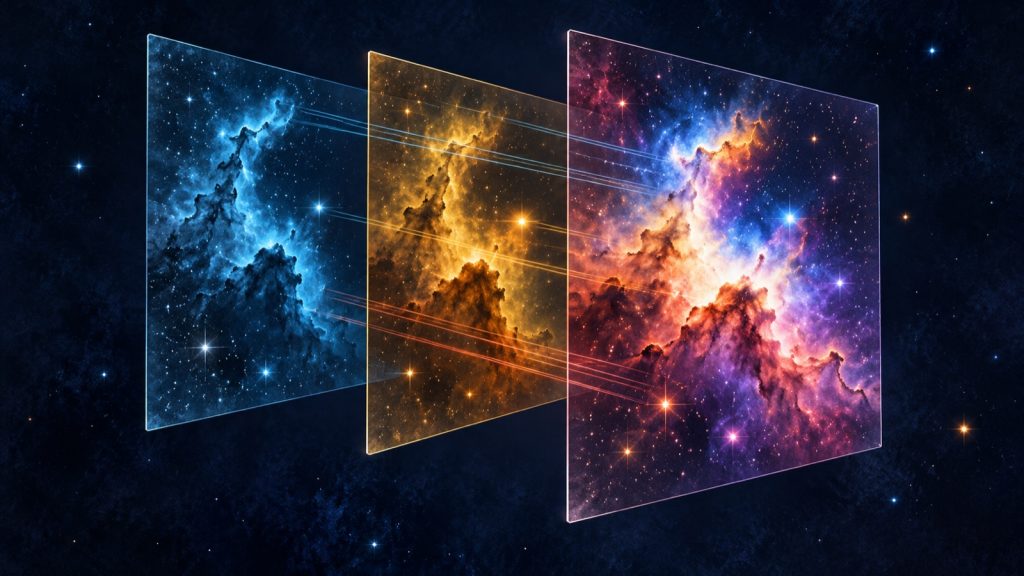
A space image can be faithful to measured light without matching human eyesight. Here is how to read the translation.
Established4 min read
THE OCCASIONAL LETTER
Stay curious.
New stories, book updates, and notes from God Plays Dice, delivered when there is something worth sharing.
EMAIL UPDATES ↗
500 DIGITAL COPIES • GIVEAWAY PREVIEW
Be first to know when the 500-copy reader giveaway opens.
Join for the book launch, verified retailer links, and the announcement for a planned giveaway of 500 digital copies. The giveaway is not open yet: dates, eligibility, a dedicated entry form, and Official Rules will be published first.
Privacy · Check your inbox to confirm your subscription. Newsletter signup alone is not a giveaway entry.