How We KnowAnswer
Why Can We Read Mammoth DNA but Not Dinosaur DNA?
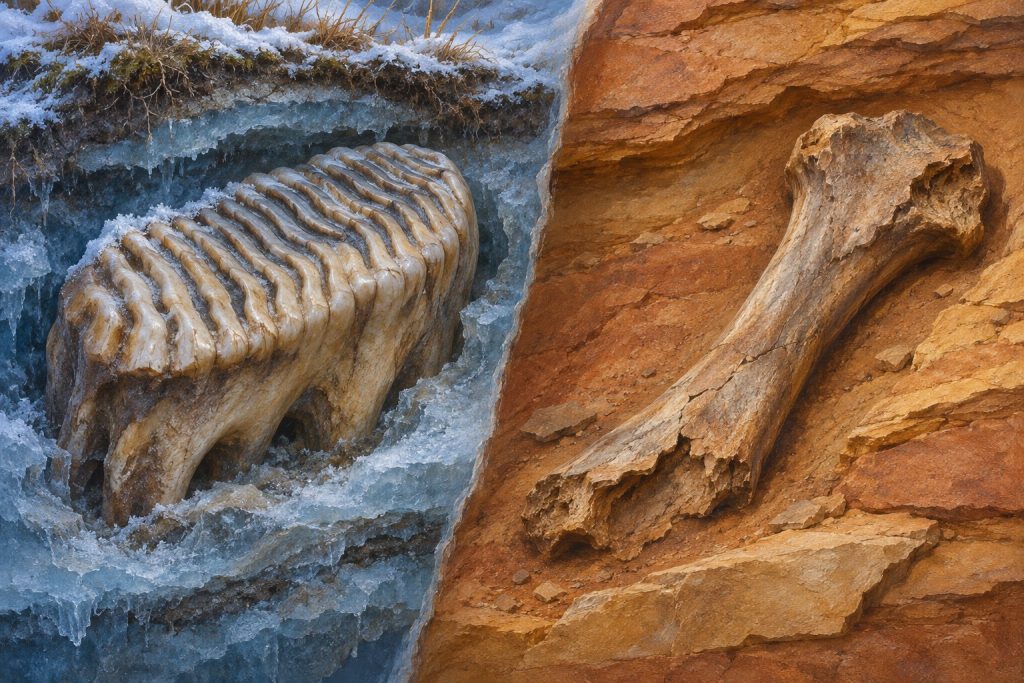
A frozen mammoth tooth can hold readable DNA. A dinosaur fossil can preserve the shape of a bone for far longer. Here’s why those are different feats.
THE QUESTION LIBRARY HOW WE KNOW
Rock layers show what came first, and natural atomic clocks help put dates on that history.
Scientists combine the order of rock layers with natural atomic clocks that measure time in years. Some atoms change into other atoms at known rates. Measuring what remains and what formed helps date a suitable mineral. Fossils are often dated by rocks or ash above and below them. Each method fits particular materials and ages, and each result has uncertainty. Carbon-14 is useful for relatively recent organic remains, not ancient dinosaur fossils.
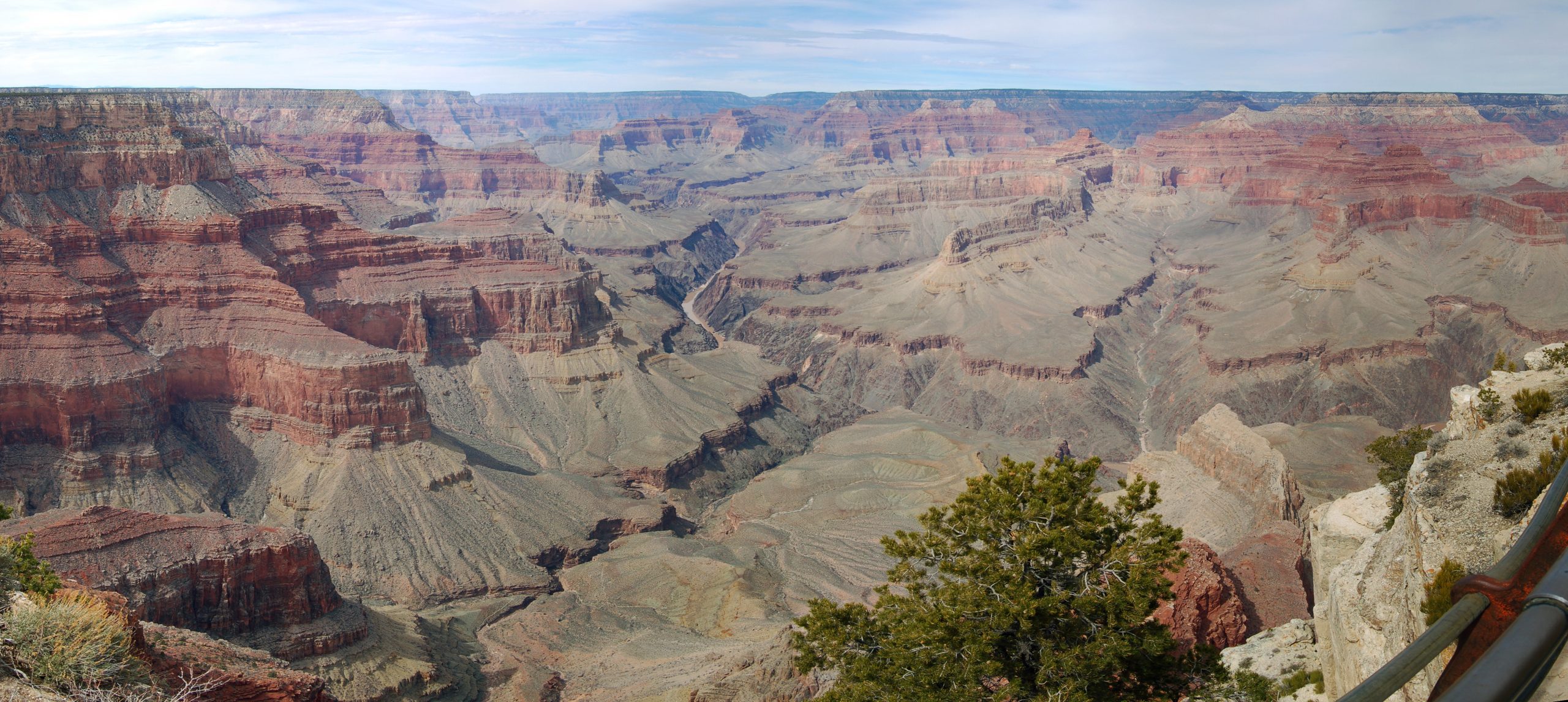
Rock layers visible from Pima Point in Grand Canyon National Park. Reading their order is one part of reconstructing the past.
WHERE THE EVIDENCE STANDS
WHAT WE DON’T KNOW YET
Some sites lack material that can give a narrow age range. Missing layers, moved fossils or later changes to a mineral can leave parts of a local history unresolved.
WHAT WOULD CHANGE THIS ANSWER
A new dated ash layer or a better analysis can revise the age assigned to a particular find. The broad method would need revision if careful, repeatable checks showed that its clocks or sample assumptions fail under the conditions in which they are used.
Scientists read two kinds of evidence together: the order of events recorded in rocks, and natural atomic clocks that can put ages on those events. The basic methods are well established. The challenge is choosing the right method for the particular rock or fossil in front of them.
Picture a fossil in a cliff made of layers. If those layers remain in their original order, the layers below were laid down earlier and those above later. That tells us where the fossil belongs in a sequence. It does not, by itself, say how many years have passed. A geologist also checks for folding, breaks and missing layers before reading that sequence.
Now suppose volcanic ash lies above and below the fossil. Suitable minerals in that ash can contain unstable atoms that change into other atoms at a known rate. The original atoms are called parents, and the atoms they produce are daughters. A lab measures their proportions. With the right checks, those measurements provide an age for the mineral and help place the fossil between an older and a younger event.
This is why a fossil can have a well-supported age even when nobody has run a clock on the fossil itself. The surrounding evidence carries the date. Fossils shared between sites and patterns in the rocks' magnetic record can provide further comparisons.
No clock suits everything. Carbon-14 dating needs preserved organic material and works best over relatively recent spans. Other clocks can reach much further into the past. Nor does a mineral's age always mean the age of the layer containing it: a grain may have formed in an older rock before being carried into a younger deposit.
A good age report therefore names the material, the method, the event it measures and the uncertainty. Scientists gain confidence by checking whether those pieces fit the geology and agree with other evidence.
Free long answer 3 of 3 this month.
Start with what can be seen in the field. Sand, mud and other sediment accumulate in layers. In a sequence that has not been overturned, a lower layer was deposited before a higher one. This is relative dating: placing events in order. It answers “which came first?” before answering “how long ago?”
The order has to be reconstructed, not assumed from a quick glance. Layers can tilt or fold. A fault can move them. Erosion can remove part of the record. A body of molten rock that cuts through existing layers formed after the layers it cut. These relationships help geologists work out which events happened before others. The Smithsonian's diagrams show why the shape and position of a layer matter.
Fossils help compare sequences in different places. An index fossil is a kind of organism known from a limited span of geologic time and found across a wide area. Finding the same index fossils can help match layers. It does not supply a calendar date on its own. The National Park Service explains that the geologic timescale began with such relative relationships; numeric dating later put ages on the sequence.
An isotope is a form of an element with a particular number of neutrons in its atoms. Some isotopes are unstable. Their nuclei change through radioactive decay. For a large collection of those atoms, the rate is predictable even though an individual atom's moment of change is not.
A half-life is the time needed for half the parent atoms to change. After another half-life, half of the remainder changes. One quarter of the starting parents is then left. This is a calculation, not a claim that every atom has an appointment to change at the same moment.
Labs measure the parent atoms and the relevant daughter atoms. A mass spectrometer, an instrument that distinguishes atoms by mass, can measure isotope proportions. The NPS account of radiometric dating describes how known decay rates turn such measurements into ages.
The clock also needs a defined starting event. Some methods date when a mineral formed; others can record when it cooled enough to keep particular atoms inside. The USGS guide makes a useful distinction: crystals in a volcanic rock can form before that rock erupts. Two sound measurements can describe different events. “The age” is meaningful only when the report says the age of what.
Often the fossil is not the material put into the dating instrument. It sits in a layer whose place in the local history can be measured. Volcanic ash is especially useful when it contains suitable minerals and its relationship to the fossil layer is clear.
Consider an undisturbed sequence with an ash layer below the fossil and another above it. The lower ash was deposited first, and the upper ash later. Dates for those eruptions bracket the time when the intervening sediment was laid down. The fossil's age is then constrained by that setting. This is a worked picture of the method, not a reported find.
The connection is part of the evidence. A fossil or grain can be moved from an older deposit into a younger one. In sedimentary rock, a mineral's formation age can be older than the deposit that holds it. The NPS Grand Canyon guide distinguishes the age of transported grains from the age of the sedimentary layer.
Other records help check the reconstruction. Matching ash by its chemistry can connect distant sites. Changes in magnetic directions preserved in layers can be compared with an established sequence. None of this makes context optional. A precise laboratory measurement cannot repair a mistaken identification of what was sampled.
Carbon-14 is one radioactive isotope, not a name for all dating methods. It enters living things through the carbon they take in. Once that exchange ends, the remaining carbon-14 declines. Dating it requires suitable preserved organic material, such as wood or carbon-bearing remains.
Its half-life is about 5,730 years. The Smithsonian describes a useful range extending to roughly 50,000 years; beyond that, too little remains for accurate measurement by the usual method. Ancient dinosaur fossils belong far outside that range. Their ages are established through other clocks and their geologic setting.
There is another check. The amount of carbon-14 in the atmosphere has varied. A raw radiocarbon result is therefore not automatically a calendar age. Oxford's radiocarbon laboratory explains calibration: comparing measurements with independently dated material, including tree rings.
The original IntCal20 paper describes a calibration record assembled from several kinds of evidence, including tree rings, lake and marine sediments, corals and cave deposits. Such comparisons account for changes in the starting carbon signal. They can also produce more than one possible calendar range. Reporting that range is part of the result, not a failure to measure anything.
The strongest practical question is whether the sample really kept the record the calculation assumes. Could daughter atoms have been present at the start? Could atoms later have entered or escaped? Those are real problems. A clock calculation with wrong starting conditions can give a wrong age.
Scientists do not need to assume every sample began with no daughter atoms. For some isotope systems, measurements of several related minerals can estimate both the age and an initial isotope ratio. This comparison is called an isochron. It has its own assumptions, including a shared starting ratio and appropriate preservation. It is not a device that makes every collection of measurements trustworthy.
Tulane's course notes also explain a check within uranium-lead dating. Two decay chains supply dates that can be compared. Disagreement can reveal a disturbed history, such as loss of lead. The details require careful interpretation; an apparent mismatch should be investigated rather than concealed.
Heating may let atoms move and alter the record even when the nuclear decay rate stays the same. A later event can partially or fully reset a particular clock. The NPS guide emphasizes both laboratory precision and geologic accuracy. A small measurement uncertainty is valuable, but it does not by itself establish that the measured event was the one the reader had in mind.
Follow the evidence from the find to the date. You do not need to operate a mass spectrometer to see whether that connection has been explained.
New measurements can refine a date, narrow a bracket or reveal that a sample recorded a later event. The important question is why the estimate changed. An age supported by several appropriate checks is stronger than an isolated number, while a troubled sample calls for caution about that particular result. The broad answer remains established: rocks preserve both sequences and measurable clocks, and scientists use them together to reconstruct the past.
THREE THINGS TO REMEMBER
How can you tell good science from bad science?
Good science makes a clear, testable claim; shows how evidence was gathered and analyzed; reports uncertainty; and lets others check the work.
God Plays Dice answers big questions in plain words, with sources and one of six honest labels.
See a mistake? Report a problem. Corrections are made openly.
CONTINUE THE THREAD
How We KnowAnswer
A frozen mammoth tooth can hold readable DNA. A dinosaur fossil can preserve the shape of a bone for far longer. Here’s why those are different feats.
How We KnowAnswer
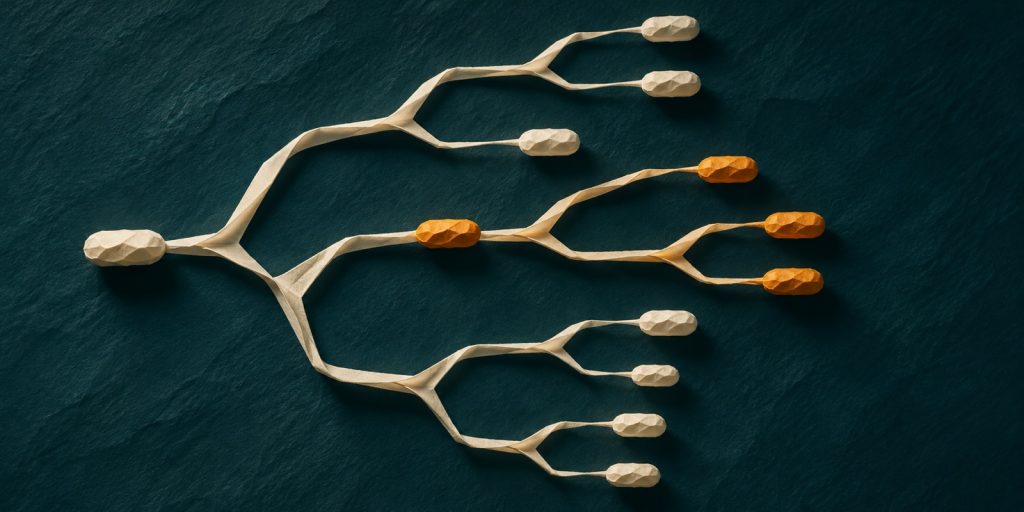
If 100 bacteria carry the same DNA change, did it arise once or many times? The answer matters when testing Ricardo Maldonado’s hypothesis.
How We KnowAnswer
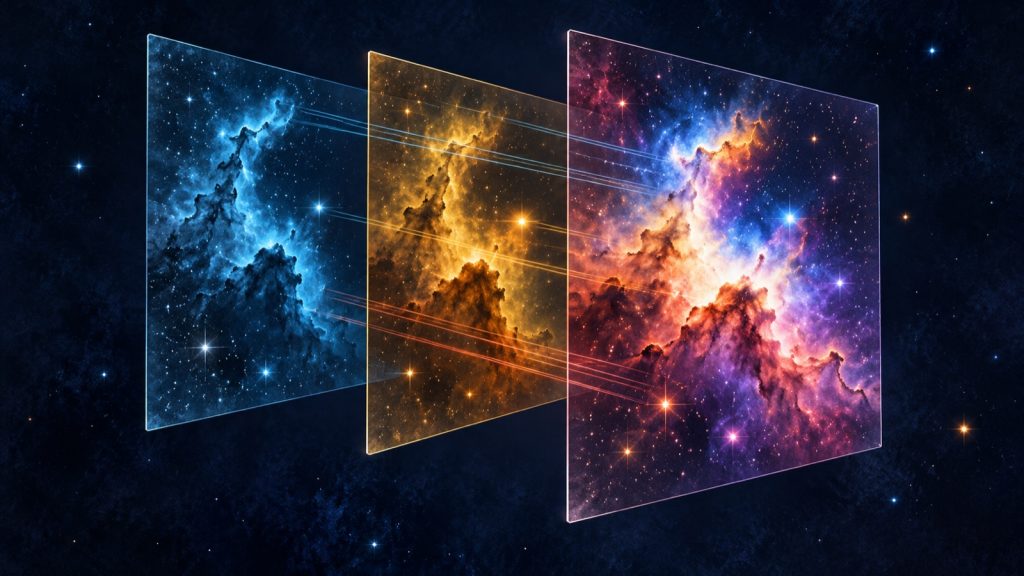
A space image can be faithful to measured light without matching human eyesight. Here is how to read the translation.
The Architect AI companion · All Access
Labels describe the evidence for a claim, not the people who hold it.
Match my phone uses your device’s light or dark setting.