
Mind & MortalityAnswer
Why do humans fear death?
Why death can feel frightening: loss, separation, uncertainty and the dying process, with clear limits on psychological explanations.
THE QUESTION LIBRARY MIND & MORTALITY
You can recognize every word and still be surprised by the speaker. While you talk, your voice reaches you by two routes.
When you speak, you hear sound traveling through the air and vibrations traveling through the bones and tissues of your head. A regular microphone records the sound in the air around it. When you play back the recording, you hear that sound without the same vibrations your body produced as you spoke. The difference can make your recorded voice sound thinner, brighter or simply unfamiliar.
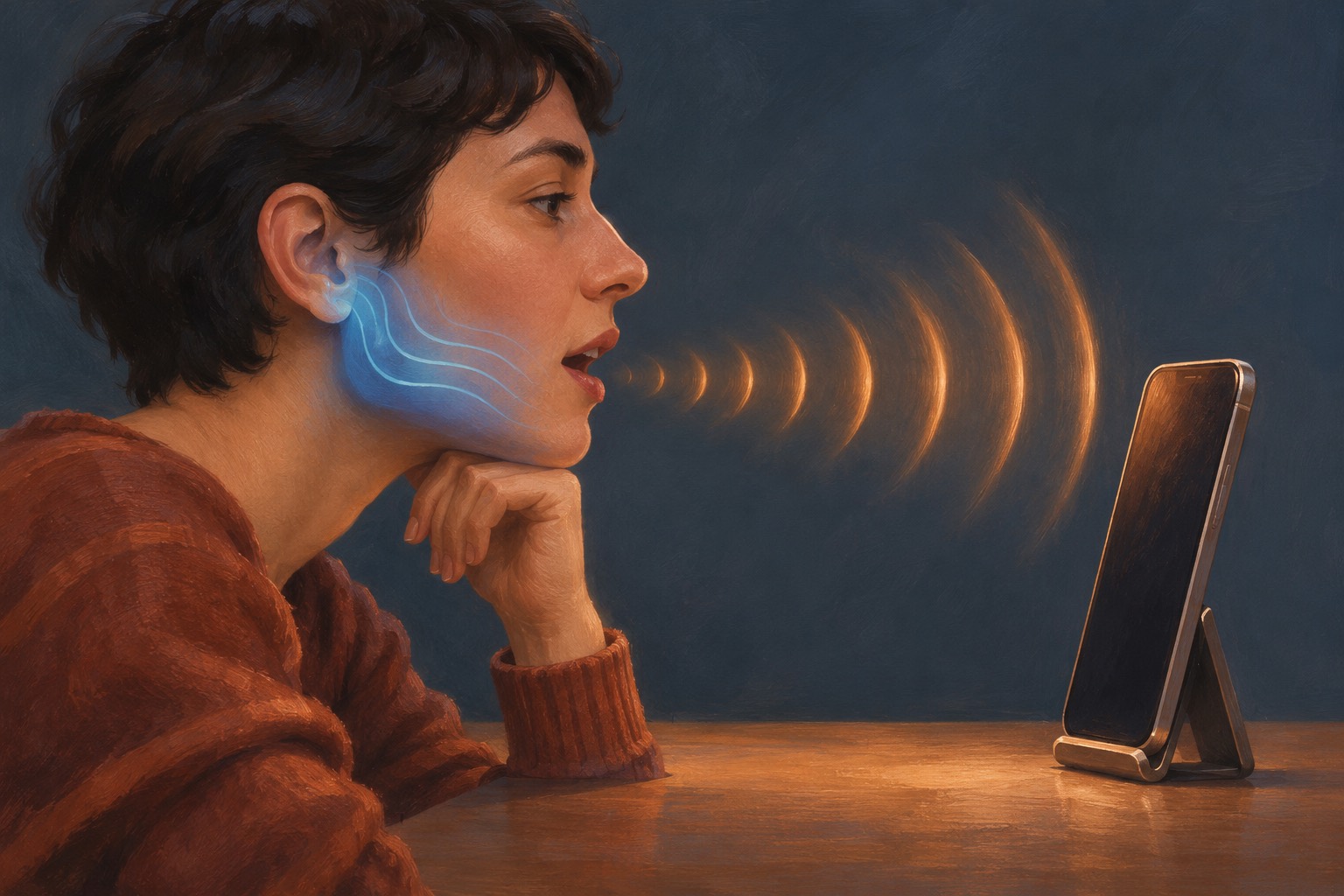
Original AI-generated illustration for God Plays Dice. Orange ripples suggest airborne sound. Blue lines suggest vibrations traveling through the speaker’s head.
WHERE THE EVIDENCE STANDS
WHAT WE DON’T KNOW YET
The exact difference you hear depends on the sound you make, your hearing, the room, the microphone and the playback. A lab result on recognizing a voice does not tell us how every person will feel about hearing a recording.
WHAT WOULD CHANGE THIS ANSWER
Measurements made during ordinary conversations and on common recording devices could show how much each factor contributes under different listening conditions.
You play back a voice memo and recognize every word. The speaker still sounds different from the person you remember hearing a moment ago. As you spoke, your ears were picking up a combination of sounds while the microphone picked up the sound in the air around it.
THE LONG ANSWER · ABOUT 2 MINUTES
The short answer, how sure we are, what we don’t know, what would change our mind and every source stay free on every page, for everyone.
All Access members read the long answer: the evidence piece by piece, the strongest objections, and how to check it yourself.
Join All Access · $1 a week Or $6 a month
Billed $52 once a year. Cancel anytime in your account.
Until December 4, 11:59 pm Pacific: the Founding rate is $39 a year, and it stays $39 while you stay a member.
Create a free account: 6 long answers a month, email only.
Paying never buys a different answer. Our Paywall Promise
Laughter can express amusement, but it also carries social information and may help people feel connected.
God Plays Dice answers big questions in plain words, with sources and one of six honest labels.
See a mistake? Report a problem. Corrections are made openly.
The Architect AI companion · All Access
Labels describe the evidence for a claim, not the people who hold it.
Match my phone uses your device’s light or dark setting.